
Unlocking Hardware Potential: High-Performance Device Driver Development
Offered for Linux / Windows / Android OS and Platforms
Offered for Linux / Windows / Android OS and Platforms
In any OS-based system, your innovative hardware is only as good as the device driver that controls it. The device driver allows the operating system to interface with the underlying hardware peripheral. A poorly written, inefficient, or unstable driver can lead to system crashes, crippling performance bottlenecks, security vulnerabilities, and a frustrating user experience.
Developing a robust driver requires a deep, specialized skill set that goes far beyond application-level programming, demanding an intimate knowledge of both kernel internals and hardware design.
Embien is your expert partner in building the perfect embedded device driver for your hardware. We specialize in designing, developing, and porting high-performance device drivers for a vast spectrum of peripherals and operating systems. Our engineers don't just write code; they architect solutions. We meticulously analyze bus protocols, optimize data paths for maximum throughput and minimum latency, and adhere to the strictest quality standards of each target OS.
Trust Embien to deliver a driver that is not just functional, but a seamless and powerful extension of your hardware's capabilities.


At Embien, we support the entire cycle of embedded device driver development in a systematic yet agile manner. Different activities we do are:

We write drivers from the ground up for your unique, custom-designed peripherals, working from datasheets or even reverse-engineering legacy hardware.

We expertly port existing drivers to new operating systems (e.g., Windows to Linux), different processor architectures (x86 to ARM), or upgrade them to support new OS versions.

We profile and refactor existing drivers to resolve performance issues, achieving goals like sub-frame video latency, maximizing PCIe bus throughput, and minimizing CPU overhead.

Our quality process includes stringent testing methodologies, stress testing, and fault injection to ensure the driver is exceptionally stable and reliable in all operating conditions.

For intelligent peripherals, we develop the necessary device-side firmware, upload it when the device driver is loaded and ensure the devices works perfectly well with the OS.

We validate and ensure the developed driver is certified by the OS vendor. One such example is the WHQL certification process for windows device drivers to get the driver signed.
Our deep understanding of kernel architectures allows us to develop natively compliant and efficient drivers across all major operating systems.

We are experts in Windows (WDM, KMDF, UMDF), Linux (for servers and workstations), and macOS (including DriverKit and legacy I/O Kit extensions).

Our primary focus includes Embedded Linux (leveraging Device Tree, V4L2, ALSA) and Android (AOSP), developing custom Hardware Abstraction Layers (HALs).

We build high-performance time-critical deterministic drivers for hard real-time systems running QNX, VxWorks, Azure RTOS (formerly ThreadX), and eCos.

For low-end microcontrollers, we develop drivers for basic RTOSes such as FreeRTOS, μC/OS-II/III, Zephyr, and MQX, as well as for the bare-metal schedulers.
If a peripheral connects to a processor, then we can write the device driver for it. Our experience spans every class of device, bus, and interface found in modern embedded and computing systems.

Wireless drivers for Wi-Fi (up to 802.11ax), Bluetooth/BLE, Zigbee, LoRa, Cellular (LTE/5G), and wired drivers for NFC/RFID (ISO14443/15693), Ethernet, and more.

Display drivers (DisplayPort, HDMI, LVDS, DSI), single/multi-touch panel controllers, keyboards, mice, joysticks, and haptic feedback devices.

Camera drivers integrating with V4L2/GStreamer, audio codecs (AC'97, I2S, SoundWire), hardware video accelerators, and TV/Radio tuners.

Complex bus drivers for PCIe, USB (Host, Device, OTG), I2C, SPI, CAN, and UART. We have achieved maximum theoretical throughput on many of these buses.

Drivers for all range of MEMS sensors including Accelerometers, Gyroscopes, Magnetometers (Compass), Barometers, and various environmental sensors.

Drivers for SATA (AHCI), NVMe, eMMC, MMC, SD/SDIO, DiskOnChip, CF Card, USB Drives, EEPROM, custom NAND flash and NOR flash memory controllers.
Whether one needs Linux driver development, Windows driver porting, or Android driver integration, Embien is the trusted partner.

We are relentless in our pursuit of performance. Our drivers are designed for maximum data throughput, minimum latency, and low CPU utilization.

Our development is streamlined by strict coding standards, peer reviews, and a robust testing methodology, resulting in exceptionally stable drivers.

Our expertise across ARM, RISC-V, x86, and other architectures means we understand the hardware context in which our drivers operate.

We understand the entire system. We know how a driver interacts with the kernel, middleware (like GStreamer/V4L2), and the final application, ensuring seamless integration.

Our expertise extends to the most advanced driver models used today.
For Windows, we are proficient in both Kernel-Mode Driver Framework (KMDF) for high-performance needs and User-Mode Driver Framework (UMDF) for enhanced stability and security. We have expertise in NetAdapterCx and WiFiCx design.
In the Linux world, we have deep expertise in the modern Device Tree model for hardware description, eliminating the need for hard-coded platform data and making drivers more portable. We are your ideal partner for any complex driver project.
On the macOS, we have developed numerous Audio and custom USB device drivers leveraging DriverKit and legacy I/O Kit extensions.
Embien excels at porting drivers to new boards and processors by:


End-to-end embedded software development including BSP, firmware, drivers, OS porting, and secure device applications.
Explore Embedded Software

Explores Binderized HAL architecture, Binder IPC communication, process isolation, and modular hardware interface implementation.
Analyze Binderized HAL
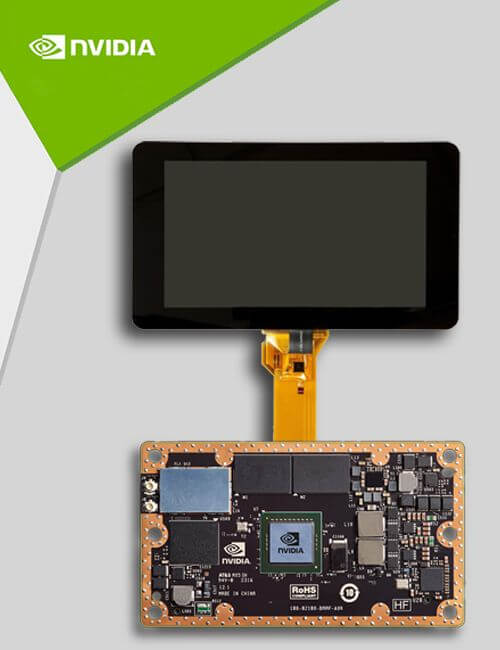
MIPI DSI display driver porting and capacitive touch enablement on NVIDIA Tegra TX2 Linux platform.
See Display Driver Solution

Discusses edge AI hardware, software layers, and architectural differences from traditional embedded systems.
Learn Edge AI Architecture

Covers Linux ISR design, interrupt registration, flags, handler implementation, and best practices for device drivers.
View Linux ISR Design

Discusses myths and challenges of platform reuse in industrial embedded systems and strategies for effective reuse.
Explore Platform Reuse
Don't let a faulty driver become the weak link in your product. Partner with the experts. Contact us today for a technical consultation and project quote.