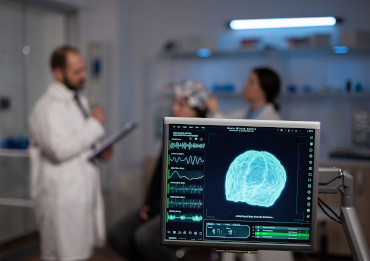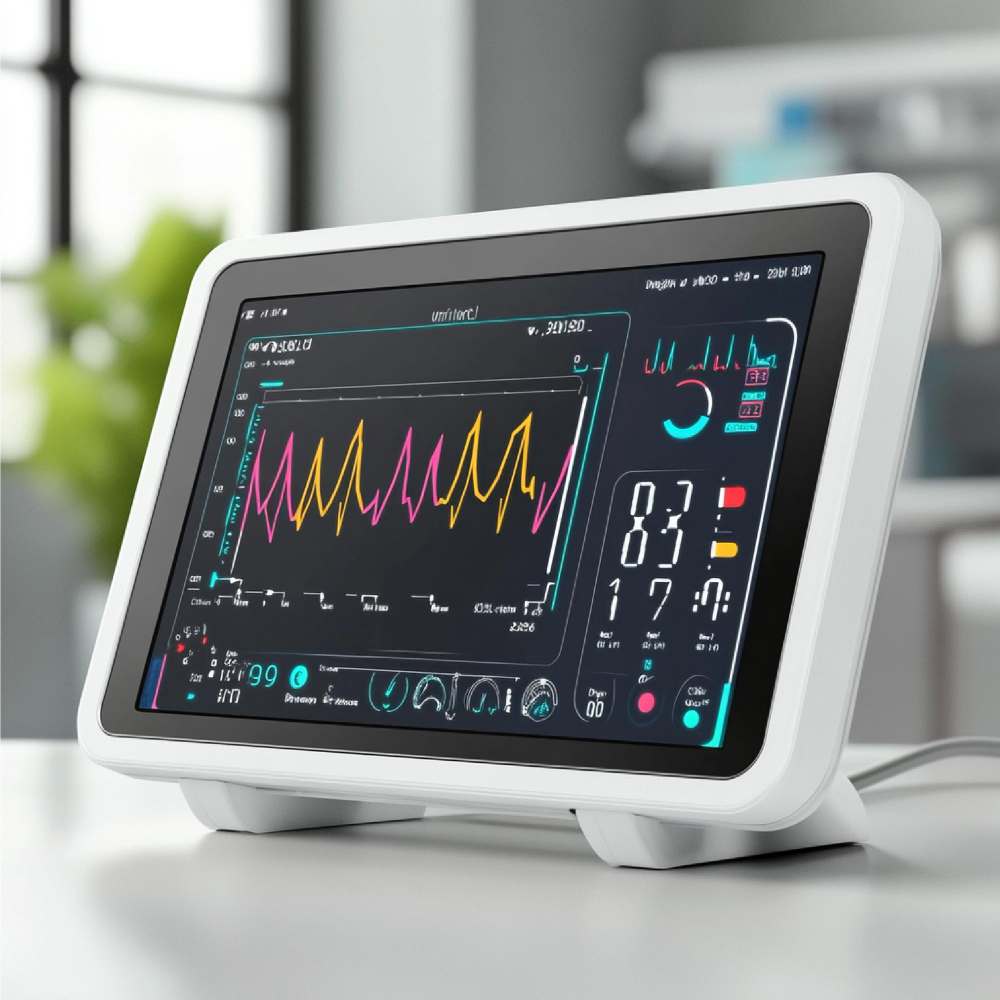


Most ECG console programs stall at the intersection of analog front-end design, firmware, and regulatory documentation — three disciplines that rarely live under one roof. Embien's custom ECG and vital signs monitor design practice keeps all three under one team: signal acquisition hardware, embedded firmware, and the technical file a notified body or FDA reviewer will actually read.
An ECG console is not just an amplifier and a display. It's a closed-loop instrument where lead-off detection, noise rejection, and alarm logic have to work together in real time, which is why designing embedded ECG monitors and trackers demands engineers who understand both the analog signal chain and the embedded software running on top of it. Our custom ECG and vital signs monitor design engagements typically start with the sensor and analog front-end, move through embedded ECG algorithm development for QRS detection and arrhythmia flags, and end with a console validated against the clinical workflow it will actually be used in. Explore our full medical device engineering services for the broader scope, including the nurse call system integration work we've delivered alongside patient monitoring programs.

Four capabilities buyers look for in an embedded product design for patient monitoring partner, whether the product is an ECG console, a vital signs monitor, or a connected bedside device.

Low-noise ECG and vital signs analog front-end design, lead-off detection, and signal conditioning engineered for clinical-grade accuracy.

QRS detection, arrhythmia flagging, and alarm logic built into firmware — the embedded ECG algorithm development work that turns raw signal into a clinical alert.

Bedside consoles that stream vitals to a nurse station or a remote monitoring platform without adding a second point of failure.

Design history file, risk management, and verification & validation evidence built alongside the hardware and firmware, not bolted on afterward.
Electrical safety and essential performance for medical electrical equipment.
Software lifecycle processes for medical device software, including embedded firmware.
Quality management for medical device design and manufacturing.
Risk management applied across the full patient monitoring device lifecycle.

Claims about custom ECG and vital signs monitor design are easy to make. Here's a real one: our team took a patient health monitor from concept to a working prototype — the kind of embedded product design for patient monitoring work that has to survive a nursing floor, not just a lab bench. It's the same signal-chain and firmware discipline behind every ECG console and vital signs monitor we design, whether the deployment is a single bedside unit or a hospital-wide monitoring rollout.
A generic vital signs monitor project often treats hardware, firmware, and documentation as separate workstreams. Our custom ECG and vital signs monitor design engagements keep the same team across analog front-end, embedded ECG algorithm development, and the regulatory file, so nothing gets lost in a handoff.
Tell us where your project stands. An engineer — not a sales queue — will follow up.