
The world of automotive technology is a rapidly evolving one where timely innovations are welcomed and embraced. One such innovation that has revolutionized the automotive industry is the automotive electronic control unit (ECU). This component has become an integral part of modern vehicles, driving innovation in unimaginable ways.
In simple terms, an automotive electronic control unit is the brain of a car (technically — one of the brains). It controls the various systems and functions that make a vehicle operate smoothly and efficiently. This includes everything from engine management and transmission control to infotainment systems and advanced driver-assistance systems (ADAS). The automotive electronic control unit not only ensures smooth functioning but also enhances vehicle safety and performance. With the advent of autonomous driving and electric vehicles, the role of electronic control units has become even more critical.
Before delving deeper into the insights of the automotive electronic control unit, let's first understand what it is. An ECU is a digital computer embedded within a vehicle. It receives data from various sensors, processes it, and then controls the operations of several subsystems within the vehicle.
For instance, the engine control unit (one type of automotive electronic control unit) receives data from sensors measuring things like oxygen levels in the exhaust, engine temperature, and throttle position. It then uses this data to adjust the air-fuel mixture injected into the cylinders, optimizing engine performance.
The ECU also plays a vital role in modern safety features. For example, in anti-lock braking systems, the electronic control unit in car receives data from wheel-speed sensors. If it detects that a wheel is about to lock up, it can modulate brake pressure to prevent this, enhancing vehicle safety.
Now that we have understood what an ECU is, let's gain some deeper insights into the automotive electronic control unit. Each electronic control unit in car has a microcontroller (the ECU's brain), memory modules for storing data, and peripheral interfaces for connecting with other systems.
The microcontroller of the electronic control unit in car executes the software that controls the vehicle's subsystems. This software is often written in high-level programming languages like C or C++, sometimes leveraging model-based development. Volatile memory is used to store temporary data (like sensor readings) and non-volatile memory (EEPROM, NAND Flash etc.) stores permanent data (like calibration parameters) and diagnostic logs that record faults or errors.
While this is a generic description, it can vary greatly depending on the specific application of the automotive electronic control unit, as it determines the capabilities and interfaces needed.
The architecture of automotive electronic control units has evolved significantly over the years. Most cars have hundreds of separate electronic control units for each subsystem. However, as cars became more complex and integrated, this approach became less feasible. Having separate electronic control units for each subsystem led to a lot of redundancy, as each ECU needed its own microcontroller, memory modules, and interfaces.
To address this issue, the industry moved towards a more centralized ECU architecture. In this architecture — called the Zonal EE architecture — a single, powerful automotive electronic control unit controls multiple subsystems. Electronic control units are becoming Domain Control Units (DCUs) as they integrate the functionalities needed for a domain, reducing redundancy and making the system more efficient.
On the software side, Adaptive AUTOSAR is being projected as the choice for such DCU architecture. On the hardware front, silicon vendors like Renesas, NXP, and TI are releasing dedicated multi-core MCUs to cater to zonal EE architecture. The underlying MCUs/MPUs are becoming more powerful to handle larger volumes of data and faster processing.
Developing an automotive electronic control unit is a complex task fraught with many challenges. One of the most significant challenges is ensuring reliability. An ECU controls critical vehicle systems, and any failure can have serious consequences. Functional safety standards like ISO 26262 outline the development process that must be followed to identify and mitigate risks.
Another challenge is managing the increasing complexity of electronic control units, leading to more complex software design as opposed to — in many cases — a super-loop-based design.
Moreover, developing automotive electronic control units requires expertise in a wide range of areas, including electronics, software engineering, and automotive systems engineering.
Effective automotive ECU Engineering demands a systematic approach combining rigorous hardware design, embedded software development, and compliance with functional safety standards. From requirements engineering through validation and verification, every phase must align with ISO 26262 and ASPICE guidelines to deliver production-ready electronic control units.
Choosing the right automotive ECU software development company is critical for program success. The ideal partner brings deep domain expertise in ECU software stacks — AUTOSAR Classic and Adaptive, bootloaders, diagnostics — combined with hands-on experience across ECU types from powertrain to body and chassis domains.
At Embien, we have a team of experienced professionals with expertise in all areas of ECU development, delivering Infotainment Panel Units, Motor Control Units, Battery Management Systems, Instrument Clusters, Telematics Control Units, Gateways, and more. Our automotive engineering services cover the full product lifecycle — from concept and architecture through production readiness.
With strong exposure to automotive development and functional safety standards like ISO 26262, we use a systematic approach to automotive electronic control unit development that involves careful planning, thorough testing, and continuous improvement. We also use advanced tools and methodologies to manage the complexity of ECU software and ensure its reliability. Explore our digital transformation services to understand how we help OEMs and Tier 1s modernize their ECU software ecosystems.
The automotive electronic control unit is an important component whose architecture has evolved significantly over the years, and it is expected to continue evolving in the future.
Despite the challenges in developing electronic control units, with the right expertise and approach it is possible to build reliable, efficient, and advanced ECUs. As we continue to drive innovation in this field, the electronic control unit in car will undoubtedly continue to play a critical role in shaping the future of the automotive industry — spanning electrification, predictive maintenance, and autonomous driving.

Explore Embien's end-to-end product engineering services for automotive electronic control units — from architecture and embedded software to production-ready ECU delivery.
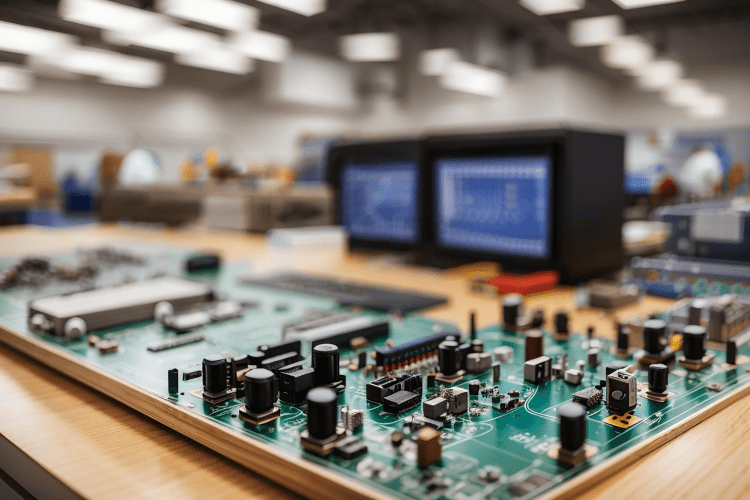
Embien's electronics product development services help OEMs and Tier 1s design and validate automotive electronic control units with full functional safety compliance.

A case study highlighting Embien's cross-platform embedded software capabilities, directly applicable to complex automotive electronic control unit development programs.