
People drive differently based on their current emotions, internal thoughts and driving environment. Understanding how AI systems learn from these human variables — and then replicating that understanding in a vehicle — is the central challenge of emotionally intelligent cars. Let us explore what determines driver behaviour and how AI systems learn to respond to it.
Research indicates that when people drive in the city, they drive slowly and are more careful. Once they hit highways, speed increases naturally and they tend to be less cautious. In fact, seeing speed limit signs can unconsciously prompt drivers to increase speed. While they have no disrespect for the law, these behaviours arise because driving is a complex activity involving many interacting factors. Understanding how AI systems learn to model these behaviours is key to building emotionally intelligent cars.
Experience – With more mileage, drivers handle even unknown roads effectively and make better decisions under pressure. Understanding how AI systems learn from accumulated trip data allows emotionally intelligent cars to replicate this experiential wisdom.
Being Fast and Furious – Inspired by media and a desire to prove themselves, some drivers indulge in thrill-seeking manoeuvres. Emotionally intelligent cars must understand how AI systems learn to identify these patterns and apply appropriate safety constraints.
Personality Traits – Impulsivity, overconfidence and impatience manifest on the road and lead to unnecessary risks. How AI systems learn to profile personality traits from driving data — without profiling in a discriminatory way — is one of the more nuanced challenges in EI car design.
Emotions – Nothing affects driver behaviour more than emotional state. Anger impairs judgement; happiness can make drivers more reckless than either anger or a neutral state. Emotionally intelligent cars must understand how AI systems learn to read emotional state in real time and adjust accordingly.
Peer Pressure – Passengers influence driver behaviour in both positive and negative ways. Intense conversations and distractions lead to loss of focus and accidents. Emotionally intelligent cars extend AI/ML integration to include cabin monitoring — not just driver monitoring.
While human drivers are shaped by all these factors, emotionally intelligent cars and AI/ML integration offer a path to safer yet still engaging driving. The challenge is to keep the EI car within safety boundaries without removing the joy of driving.
One approach is for the EI car to observe the driver whenever he drives, learning his style through AI/ML integration, and then replicating it within safety boundaries. The EI car can eventually understand the driver's personality traits, recognise in-cabin conversations, determine the mood and adjust accordingly. This is a continuous process — understanding how AI systems learn from new data is understanding how the EI car becomes a better companion over time.
Another approach is emotional driving modes — happy, sad, angry or neutral — that the driver can select. Instead of sports mode, city mode or eco mode, the EI car delivers emotional modes. AI/ML integration enables these modes to be nuanced and personalised, rather than simple preset profiles. Emotionally intelligent cars can blend both approaches: learning passively from the driver while also accepting explicit emotional inputs to fine-tune the experience.
We will have to wait and see how they turn out. Nevertheless, emotionally intelligent cars will always ensure the safety of occupants and surroundings before any adventure — and AI/ML integration is what makes this balance possible.
How AI systems learn in emotionally intelligent cars depends heavily on machine learning for embedded systems — deploying and training neural networks on resource-constrained automotive hardware. Machine learning for embedded systems techniques such as federated learning, on-device fine-tuning and quantization-aware training allow the EI car to keep learning locally without sending sensitive driver data to the cloud. Embien's edge computing services include the machine learning for embedded systems expertise needed to make this real-time, privacy-preserving learning possible.
How AI systems learn can be accelerated dramatically when connected cars share anonymised insights across a fleet. While each EI car learns individually from its driver, connected cars collectively build a richer model of human driving behaviour across geographies, road types and weather conditions. This fleet-level AI/ML integration makes every new EI car smarter from day one. Automotive engineering services from Embien help OEMs design the AI/ML integration architectures that support both individual and fleet-level learning in their emotionally intelligent cars programs.

Explore how Embien's cross-domain expertise powers the AI/ML integration behind emotionally intelligent cars — from understanding how AI systems learn to deploying adaptive models on vehicle hardware.

Embien's AI and ML development services cover the full lifecycle of AI/ML integration — from data pipeline design to on-device model training for emotionally intelligent cars.
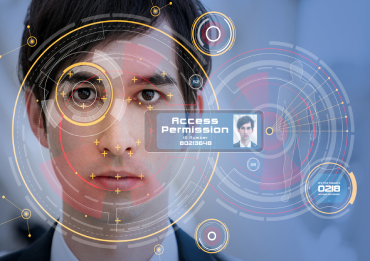
A case study demonstrating Embien's expertise in machine learning for embedded systems — the same AI/ML integration disciplines that power emotionally intelligent cars and driver behaviour learning.