
The automotive industry leverages a variety of automotive communication protocols to transfer information from one entity to another, in some cases defining its own standards. One such technology that has revolutionized the way vehicles exchange data is the Media Oriented Systems Transport (MOST) bus. In this article, we will delve into the intricacies of the MOST bus and explore its applications in the automotive domain.
The Automotive MOST Bus is a high-speed multimedia network that enables seamless communication between various components within a vehicle. It serves as a backbone for transmitting audio, video, and control signals, facilitating the integration of infotainment, driver assistance, and other vehicle systems. Understanding the fundamentals of the MOST bus is crucial for automotive engineers and enthusiasts alike, as it plays a pivotal role in modern vehicle architectures.
MOST was designed to carry high bandwidth multimedia data over the vehicle as it is not supported by the prevalent CAN bus. It was initially specified with joint efforts from BMW, Becker (Harman) and OASIS Silicon (SMSC/Microchip) in the 1990s. Later the consortium included more members and today many OEMs use Automotive MOST Bus to carry their multimedia data.
To comprehend the workings of the MOST bus, it is essential to understand how it maps to the OSI layers which is a framework for understanding and implementing network protocols. The OSI model consists of seven layers, each with its own distinct functionality. In fact, the Automotive MOST Bus specification defines all the 7 layers of the Open Systems Interconnection (OSI) model. In the case of the MOST bus, these layers are mapped onto the underlying physical and logical components of the network.
The first layer of the OSI model, the Physical layer, deals with the transmission of raw bit streams over physical media. In the context of the MOST bus, this layer encompasses the optical and electrical physical connections used for data transfer. The second layer, the Data Link layer, is responsible for error detection and correction, ensuring reliable transmission of data packets. The OSI layer mapping provides a structured approach to understanding the different aspects of the MOST bus and its communication protocols. The other higher layers are mapped via the Network services for general transport and Function blocks at presentation/application layer. For synchronous transport of data, the Streaming services is defined which encompasses till the application layer as well.
MOST buses come in different variants, each tailored to meet specific requirements of automotive applications. The MOST25 variant, as the name suggests, supports a maximum data transfer rate of 25 Mbps. It was the first specification and it supported only optical physical layer. The second generation MOST50 variant offers a higher data transfer rate of 50 Mbps, supporting both electrical and optical communication.
With a maximum data transfer rate of 150 Mbps, the third generation MOST150 enables seamless streaming of high-definition audio and video content. The MOST150 variant also boasts enhanced network security and additional features like Ethernet bridging, making it ideal for complex automotive architectures.
| Feature | MOST25 | MOST50 | MOST150 |
|---|---|---|---|
| Bit Rate | 25 Mbps | 50 Mbps | 150 Mbps |
| Physical Layer | Optical | Electrical/Optical | Electrical/Optical |
| Frame Size | 512 bits | 1024 bits | 3072 bits |
| Interface Control | NIC | INIC | INIC |
| Streaming Data (Synchronous Channel) | Up to 21.17 Mbps | up to 44.93 Mbps | up to 142.85 Mbps |
| Packet Data (asynchronous Channel) | 10.84 Mbps | 44.54 Mbps | 142.85 Mbps |
| Control Channel | 405.84 Kbps | Up to 810.62 Kbps | Up to 1.130 Mbps |
| Other channels | - | - | Isochronous and Ethernet |
The frame format and signaling speed varies between these MOST25, MOST50 and MOST150 interfaces, thus making them directly incompatible. Today MOST150 is the most used protocol in automotive multimedia networks.
MOST25 was the foundation of the automotive MOST bus ecosystem — operating at 25 Mbps over a plastic optical fibre (POF) ring, with a single synchronous channel supporting up to 15 stereo audio connections and a control channel at 405 Kbps. MOST25 nodes use a Network Interface Controller (NIC) to manage the ring and expose control and source ports to the application software. The MOST bus system built around MOST25 defined the ring topology, timing master concept, and function block addressing model that carried forward into MOST50 and MOST150. Our cross-domain embedded services include MOST25 node bring-up, NIC driver integration, and MOST bus system migration consulting for programs moving to higher-bandwidth variants.
The MOST50 and MOST150 interfaces extend the automotive MOST bus to meet the growing bandwidth demands of modern vehicle infotainment and ADAS camera systems. MOST50 and MOST150 interfaces introduce the Intelligent Network Interface Controller (INIC), which consolidates PHY, MAC, and network management into a single device and enables both optical and electrical physical layers. The MOST50 and MOST150 interfaces also add isochronous channel support and 48-bit Ethernet packet addressing (MOST150 only), enabling seamless transport of Ethernet frames alongside synchronous media streams. Our multimedia on embedded systems expertise covers MOST50 and MOST150 interfaces integration, INIC bring-up, and end-to-end audio/video streaming validation for automotive infotainment programs.
The MOST bus system implements a ring network topology where all the devices in the network, also called nodes, are connected in a circular fashion with the end node connected back to the starting node. The MOST bus system can support up to 64 nodes. It is also possible to realize a star topology, though it is not used widely. To support high-availability use cases, the MOST bus system also utilizes a double-ring topology where breakage between two nodes in a ring will close that ring and forces communication via another ring.
Node addressing in the MOST bus system is position-based — the Timing Master is assigned position 0 and consecutive nodes receive incremental positions based on their connection order. The MOST bus system also allows group addressing starting from 0x300, where the same class of devices such as amplifiers or infotainment units can be controlled with a single frame. This flexible addressing model makes the MOST bus system well-suited for complex, multi-supplier infotainment architectures.
The internal architecture of the Media Oriented Systems Transport Device is captured in the diagram below.
As can be seen, the underlying layer 2 (data link) management is done by the MOST Network Interface Controller (NIC) for MOST25 and Intelligent Network Interface Controller (INIC) for MOST50/MOST150 protocols. They are implemented as hardware interfaces and offer a control port (CP) and Source Port (SP) to the higher-level layers.
The Control Port is used for transferring control information and packet data. In this, the higher-level network layer is implemented via middleware libraries as Network Service layer. The application layer is implemented via Function blocks.
The Source Port is used to transfer streaming multimedia data and is implemented as a mix of software and hardware. The data is encrypted/decrypted using hardware codec and sent/received over the SP.
There is a bypass mechanism provided in the physical layer so that the incoming data is passed through when the Media Oriented Systems Transport device is booting up or not yet ready to process or in fault.
The MOST bus primarily relies on optical fibers for data transmission, ensuring high-speed and noise-free communication. The Optical Physical Layer (OPL) of the Automotive MOST Bus comprises optical transceivers and fiber optic cables. The optical transceivers convert electrical signals into optical signals and vice versa, facilitating seamless transmission over the fiber optic cables.
LEDs are in red wavelength and the fiber optic cables used are Plastic Optical Fibres (POF) with a 1 mm core that are typically low cost and are designed to withstand the harsh automotive environment. They are resistant to electromagnetic interference (EMI) and can transmit data over the vehicle network without signal degradation. The Automotive MOST Bus employs a ring topology, where the optical fibers form a closed loop connecting all the network nodes. The use of optical fibers also eliminates the need for ground loops, which can cause electrical noise and disrupt communication in traditional electrical bus systems.
In addition to the optical interface, the MOST50 bus also supports an Electrical Physical Layer (EPL) for communication. The EPL utilizes unshielded twisted pair (UTP) cables, allowing for cost-effective implementation in vehicles. For tighter EMC requirements, STP (Shielded Twisted pair cables are recommended.
The MOST150 standard also defines a co-axial line which provides enhanced data transfer rates and improved EMC performance. The electrical transceivers in the Automotive MOST Bus convert electrical signals into differential signals, reducing the susceptibility to electromagnetic interference. Receivers employ equalizers which are used to compensate for the attenuation of higher frequencies. The EPL complements the optical interface, providing flexibility and versatility in automotive communication systems.
The Media Oriented Systems Transport bus uses a specific frame format for transmitting data and control signals between network nodes. Understanding this frame format is crucial for analyzing and interpreting the data exchanged on the bus. The MOST frame consists of various fields, each serving a specific purpose.
The MOST25 frame has a 1-byte header with 4 bits of it is the preamble that is used for synchronization purposes. The second nibble is the boundary descriptor that specifies the number of quadlets available for the streaming data in this packet (Boundary Descriptor * 4). This is followed by the stream data followed by the balance number of packet data. Two bytes of control data are transmitted followed by the Frame control and Parity bit. The size of each control message is 32 bytes and are transferred over 16 frames.
In MOST50, the header has 11 bytes containing different sub-fields such as Administration, Lock Flag, Boundary Descriptor and 4 bytes of Control data. Then it is followed by stream data and then the packet data.
MOST150 header is like MOST50's but with one extra byte and preamble information. The rest of the packet is split between stream and packet data based on the Boundary Descriptor value.
Nodes in the network have many functional blocks implemented above the datalink layer. Of them, there is a NetBlock that is responsible for general administration of the device including positions, group/logical addresses, etc.
Each node in the network is addressed based on their position. Media Oriented Systems Transport specification clearly specifies the allowed address ranges in a 16-bit format. The node acting as the Timing Master is assigned the position 0 and all the consecutive nodes are assigned incremental positions based on the order in which they are connected. The Node address is assigned by adding a value of 0x400 to the position.
MOST also allows Group Addressing starting from 0x300 where the same class of devise such as amplifiers, infotainment units etc. can be assigned the same group address and controlled with a single frame. A special address 0x3C8 is assigned for blocking-broadcast where all the nodes must acknowledge before the next messages are transmitted. The non-blocking broadcast address 0x3FF can be used for non-critical data where acknowledgments are not needed.
The Media Oriented Systems Transport (MOST) bus has emerged as a game-changer in the automotive industry, enabling seamless communication between various components within a vehicle. In this article, we have explored the fundamentals of the Automotive MOST Bus, including its OSI layer mapping, variants — MOST25, MOST50 and MOST150 interfaces, the MOST bus system network architecture, physical layer connections, frame format and network services.
Information about the higher-level application layer will be covered in the next part of this article.

Embien delivers innovative embedded and automotive solutions for high-speed multimedia communication systems like Automotive MOST, enabling reliable infotainment and in-vehicle connectivity across modern vehicle architectures.

Embien’s Electro-Optics Design Services enable high-performance optical and multimedia communication solutions, supporting reliable data transmission across Automotive MOST-based infotainment and in-vehicle networks.
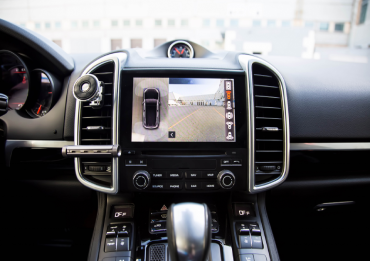
A case study on automotive multimedia integration — demonstrating Embien's expertise in media oriented systems transport stack bring-up, automotive MOST bus validation, and Qt-based camera and image rendering.