
The automotive industry is constantly evolving, and advancements in technology have revolutionized the way vehicles operate. One of the key innovations in this regard is the use of automotive Ethernet, a high-speed communication network that enables various components within a vehicle to exchange data seamlessly. In this article, we will delve into the physical layer of automotive ethernet, exploring its functionalities and the standards that govern its operation, and then touch upon the higher-layer protocols running on the same.
The need for a robust and reliable communication system in vehicles led to the development of the automotive Ethernet standard. While the conventional CAN/LIN buses were initially sufficient, OEMs recognized the need for faster communication especially for multimedia transport. Broadcom invented the BroadR-Reach protocol, which is a modification of conventional Ethernet to operate over a single unshielded-twisted wire — also called 100BASE-T1 — and found wide applications in infotainment systems. Later it was standardized by the OPEN Alliance Special Interest Group and by IEEE as IEEE 802.3bw. With this, the scope of automotive Ethernet has expanded significantly, and it plays a crucial role in enabling sensor data fusion, real-time control, and high-speed connectivity.
IEEE 802.3bw, commonly referred to as 100Base-T1, is the physical layer of automotive ethernet. It specifies the method of encoding, signaling, and physical media for automotive Ethernet communication. The 100Base-T1 standard supports data rates of up to 100 Mbps over a single pair twisted-pair cable, making it suitable for a wide range of automotive applications. Unlike conventional Ethernet which has two pairs of unidirectional lines, the physical layer of automotive ethernet uses a single full-duplex line.
The physical encoding of the physical layer of automotive ethernet is also defined. 100BASE-T1 employs a combination of PAM3, 4B/3B, and 3B2T encoding scheme. The data coming as 4 bits are grouped to 3B data, then encoded to 2 Ternary Symbols and finally sent as Pulse-Amplitude Modulation (PAM) with 3 different voltage levels. The 100 Mbps line operates at a signal rate of 66.67 Mb/s. The later version 1000Base-T1 (IEEE 802.3bp) follows 80B/81B modulation with PAM3 encoding at 750 Mb/s. Physical layer of automotive ethernet supporting 2.5G, 5G, and 10G bit/sec gigabit speeds are also available today.
With just a change in the physical layer of automotive ethernet, it is possible to run all typical applications on top of the TCP/IP stack. While many applications run in this model, TCP is inherently a slow protocol that cannot meet the stringent timing requirements of many real-time applications. To address this, various alternatives are proposed. Of these, the most popular are Audio Video Bridging (AVB), its evolution — Ethernet Time-Sensitive Networking (TSN), and Time-Triggered Ethernet (TTEthernet). These protocols operate at Layer 2 and above to prioritize time-sensitive data streams, ensuring low latency and deterministic communication.
AVB — Audio Video Bridging — refers to a broad set of standards that allows transmission of real-time high-bandwidth media streams. It offers capabilities to reserve bandwidth, prioritize traffic, and perform time-synchronization across endpoints. Standards under AVB include Generalized Precision Time Protocol (gPTP; IEEE 802.1AS-2011) for time-synchronization, IEEE 802.1Q-2014 for traffic prioritization, and IEEE 802.1Qat for Stream Reservation Protocol (SRP). IEEE then renamed Audio Video Bridging to Time-Sensitive Networking and extended it with two new capabilities — time-scheduled traffic and frame preemption.
With these features, AVB and TSN ethernet enable nodes — talkers and listeners — to achieve high throughput and low latency. While these AVB and TSN ethernet protocols run directly on top of Ethernet and applications can leverage them directly, it is possible for TCP/IP to co-exist in the same system.
Time-triggered ethernet (TTE) is another Layer 2 technology that finds applications in automotive Ethernet. It is defined by SAE International and standardized as SAE AS6802. It provides per-packet traffic management features including time-triggered traffic scheduling, per-flow policing of packet timing, and traffic partitioning. Three traffic classes — Synchronization Traffic, Time-triggered traffic, and Rate-Constrained traffic — are defined, and the remaining unguaranteed bandwidth is available for other regular protocols.
Both AVB and TSN ethernet and time triggered ethernet offer reduced latency and high bandwidth. In general, AVB and TSN ethernet find wide application in multimedia, infotainment, and soft real-time use cases, while time triggered ethernet is being used in hard real-time applications such as chassis and powertrain control.
The network architecture for automotive Ethernet is a critical aspect that determines the scalability, reliability, and performance of the communication system. A well-designed network architecture ensures efficient data flow, minimizes latency, and provides redundancy for fault tolerance.
One typical approach to designing the automotive network architecture is the use of a heterogeneous networking topology where data flows across multiple buses. The Ethernet is organized as a hierarchical network with partitioning done based on application use cases. Legacy options such as VLAN (Virtual LAN) IDs are used to further partition traffic to relevant zones.
Above the physical layer of automotive ethernet, automotive ethernet protocols such as SOME/IP (Scalable Service-Oriented Middleware over IP), DoIP (Diagnostics over IP), and AUTOSAR Adaptive Platform services define how ECUs discover services and exchange data. Selecting and configuring the right automotive ethernet protocols stack requires deep knowledge of the trade-offs between latency, security, and bandwidth for each vehicle domain. Our cross-domain embedded services cover automotive ethernet protocols integration across infotainment, ADAS, and zonal controller programs — from physical layer of automotive ethernet bring-up through application-layer service mesh configuration.
Ethernet embedded development for automotive applications spans the complete vertical — from PHY driver and MAC bring-up through the physical layer of automotive ethernet, AVB/TSN configuration, and application-layer service integration. Ethernet embedded projects must also address EMC validation, switch configuration, and end-to-end timing measurements to verify that latency budgets are met across the network. Our turnkey product development services deliver end-to-end ethernet embedded solutions — starting from physical layer of automotive ethernet hardware design through full-stack software integration and automotive network validation.
By understanding the evolution of the automotive Ethernet standard, the physical layer of automotive ethernet, and the various technologies — including AVB and TSN ethernet and time triggered ethernet — that enhance its capabilities, automotive engineers can make informed decisions when designing their communication systems.
The future of the physical layer of automotive ethernet looks very promising as it is poised to become the preferred choice for the vehicle bus. On the technology front, speeds are increasing beyond 10 Gbps, and standards like IEEE 802.3cg (10BASE-T1S) using physical layer collision avoidance (PLCA) are being explored to achieve deterministic bandwidth.
Deploying an automotive Ethernet system is more challenging as it involves network-specific planning, configuration, and robust testing. But with time triggered ethernet, AVB and TSN ethernet, and a maturing automotive ethernet protocols ecosystem, it is going to be the next CAN in vehicle communication.

Embien’s Product Engineering Services enable robust Automotive Ethernet implementations, supporting physical layer integration, Layer 2 protocols, and reliable high-speed vehicle communication architectures.

Embien's software-defined vehicles practice leverages deep expertise in the physical layer of automotive ethernet and time triggered ethernet — enabling deterministic, scalable in-vehicle networks for next-generation zonal vehicle architectures.
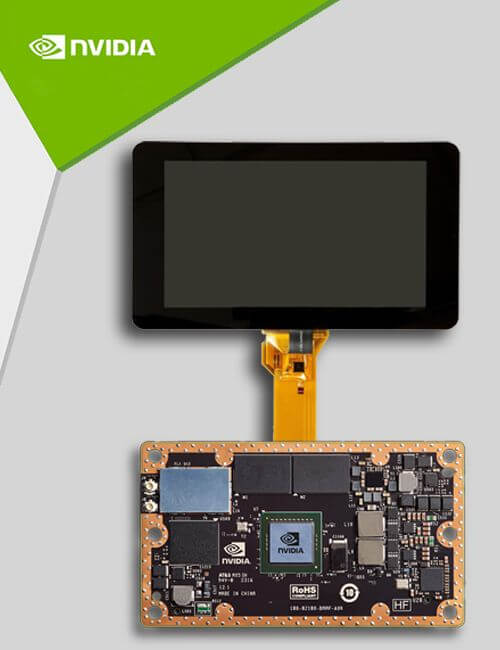
A case study on MIPI DSI display driver development for NVIDIA Tegra TX2 — demonstrating Embien's automotive embedded expertise in physical layer bring-up, ethernet embedded driver development, and automotive SoC integration.