
This article covers another important ECU in the electric vehicle (EV). Electric vehicles have revolutionized the automotive industry, offering a greener and more sustainable mode of transportation. At the heart of these vehicles lies the battery, which powers the electric drivetrain. However, ensuring the optimal performance and longevity of these batteries is a complex task. This is where battery management systems for electric vehicles — specifically the automotive BMS ECU — come into play. In this comprehensive guide, we will demystify the automotive BMS ECU and explore its importance in electric vehicles.
Before we delve into the intricacies of the automotive BMS ECU, let's first understand the battery. Batteries are essentially electrochemical devices that store electrical energy in the form of chemical energy during the charging cycle and convert them back to electricity in the discharge cycle. Batteries contain one or more cells and can be of different chemical compositions. Of the battery chemistries commonly used in electric vehicles, the most prevalent types are Lithium-ion (Li-ion) and Nickel-Metal Hydride (NiMH) batteries. Li-ion batteries are favored for their high energy density and longer lifespan, making them the preferred choice for EV manufacturers. NiMH batteries, on the other hand, offer lower energy density but are more cost-effective.
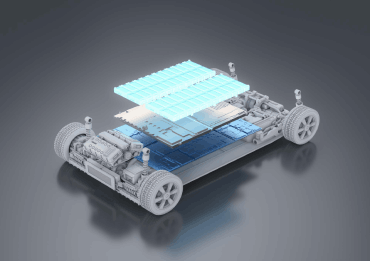
Typically, batteries are organized as packs, where multiples of them are connected in series offering higher voltage (48 V, 60 V, 72 V, and so on) for better efficiency. There may be multiple packs connected in parallel to increase the power capacity.
The automotive BMS ECU is an essential electronic control unit in electric vehicles that ensures the safe and efficient operation of the battery pack. It acts as the brain of the battery, continuously monitoring its performance, managing its charging and discharging cycles, and protecting it from various hazards. Among all battery management systems for electric vehicles, the automotive BMS ECU plays a crucial role in maximizing battery life, optimizing performance, and enhancing the overall safety of electric vehicles.
The automotive BMS ECU performs several key functionalities to safeguard the battery and optimize its performance. First and foremost, it provides battery protection by monitoring and controlling the charging and discharging processes. It prevents overcharging, which can lead to thermal runaway and battery degradation, and protects against over-discharging, which can cause irreversible damage to the battery. Additionally, the automotive BMS ECU ensures temperature regulation, preventing the battery from operating outside its optimal temperature range.
Battery monitoring is another crucial functionality of EV battery management systems. The automotive BMS ECU continuously measures various parameters such as voltage, current, and temperature to assess the state of the battery. This data is used to estimate the State of Charge (SoC), remaining capacity, predict battery life, and detect any anomalies or faults. By closely monitoring the battery's health, the automotive BMS ECU enables proactive maintenance and prevents potential failures.
The automotive BMS ECU also plays a vital role in battery optimization. It employs sophisticated algorithms to manage the charging and discharging cycles, ensuring that the battery operates within its optimal range. This helps maximize energy efficiency, extend battery life, and enhance the overall performance of the electric vehicle.
Furthermore, the automotive BMS ECU aids the vehicle in energy recovery during braking whereby kinetic energy is converted to electric energy with the help of the Motor Control Unit (MCU) and used to recharge the battery, extending the vehicle's range.
To understand the architecture of BMS, let's explore its key components and their interconnections.
The block diagram for the architecture of BMS depicts the key elements of the automotive battery management system. The main core is the Battery Management IC, which monitors battery parameters such as voltage, current flow, temperature, State of Charge (SOC), and State of Health (SOH). All these parameters help evaluate the battery charge level, remaining capacity as a percentage of the original capacity, available power, temperature, and many other factors. Modern battery management ICs also support cell balancing features that avoid imbalance in charge levels of individual cells. They ensure that the battery is operated within its safe operating range.
The available data is transferred to the main vehicle bus via CAN or LIN. A dedicated microcontroller acquires all information from the Battery Management IC via a serial interface and transfers it to the vehicle bus in a customized protocol. Multiple battery management ICs may have to be daisy-chained based on the number of cells in the battery pack. Temperature of the battery is a major factor, calling for a dedicated thermal management system with a cooling medium such as liquid or air. When any parameter overshoots or drops below a threshold level, the battery power is cut using a battery protection unit that includes a protection switch controller with MOSFETs.
EV battery management systems have come a long way since their inception, evolving from basic protection circuits to advanced intelligent solutions. Initially, battery management systems for electric vehicles focused primarily on protecting the battery from overcharging and over-discharging. As technology progressed, additional functionalities were incorporated, such as temperature regulation and state-of-charge estimation.
Modern EV battery management systems have become highly sophisticated, employing advanced algorithms and artificial intelligence to optimize battery performance. They utilize predictive analytics to anticipate battery failures and proactively take preventive measures. Furthermore, advanced automotive BMS ECU designs enable real-time monitoring and remote diagnostics, allowing for efficient maintenance and minimizing downtime.
The evolution of the architecture of BMS has been driven by the increasing demand for longer battery life, improved safety, and enhanced performance. As electric vehicles continue to gain popularity, the development of more advanced automotive BMS ECU designs will play a critical role in shaping the future of sustainable transportation.
Designing and implementing an effective automotive BMS ECU is not without its challenges. One of the primary challenges is accurately estimating the remaining battery capacity. Factors such as aging, temperature variations, and load fluctuations make it difficult to precisely determine the available energy. However, advancements in machine learning and data analytics are helping overcome these challenges by enabling more accurate predictions.
Another challenge lies in managing the complexity of the battery pack. Electric vehicles typically consist of numerous battery cells or cell groups, each with unique characteristics. Balancing the load and ensuring uniformity across all cells is essential for optimal performance and longevity. Advanced EV battery management systems employ cell balancing algorithms to address this challenge, redistributing the charge among the cells and maintaining equilibrium.
Furthermore, the integration of the automotive BMS ECU with other vehicle systems poses a challenge. The BMS must seamlessly communicate with the motor controller, onboard charger, and other components to ensure coordinated operation. Standardization of communication protocols and interfaces is crucial to enable interoperability and simplify integration.
Thermal management of the battery pack is another important task. Electric vehicle batteries generate heat during operation, and the automotive BMS ECU must ensure that the temperature remains within safe limits to prevent damage or degradation.
Achieving ISO 26262 compliance within the architecture of BMS requires careful partitioning of safety-critical monitoring functions, redundant sensing paths, and well-defined fault reaction strategies. The architecture of BMS must also address ASIL decomposition for voltage and temperature monitoring channels to meet OEM safety requirements.
Safety is paramount in electric vehicles, and battery management systems for electric vehicles play a critical role in ensuring it. By continuously monitoring the battery's parameters, the automotive BMS ECU detects any anomalies or faults that could compromise safety. In case of a fault, the BMS can isolate the affected cells or cell groups, preventing further damage and potential hazards.
Moreover, EV battery management systems provide real-time information on the battery's state of charge and health, allowing users to make informed decisions. This enables drivers to plan their routes accordingly, ensuring they have sufficient charge to reach their destinations. The automotive BMS ECU also alerts users in case of abnormal conditions, such as high temperatures or low voltage, prompting them to take appropriate actions.
In the event of an accident, the automotive BMS ECU is designed to disconnect the battery to minimize the risk of electrical shock and further damage.
EV BMS embedded software development encompasses the full stack from hardware abstraction and BSP bring-up to cell monitoring algorithms, CAN/LIN communication stacks, and OTA update mechanisms. Robust EV BMS embedded software development practices also include hardware-in-the-loop (HIL) testing and model-based design methodologies to validate BMS behavior across the complete operating envelope.
As electric vehicles continue to gain momentum, the importance of battery management systems for electric vehicles will only increase. The automotive BMS ECU plays a critical role in ensuring the performance, safety, and longevity of the battery pack, making it a key component in the success of electric vehicles. With advancements in technology and ongoing research, we can expect to see further improvements in the architecture of BMS design and implementation, leading to more efficient, reliable, and sustainable electric vehicles.
Team Embien has rich experience in delivering cutting-edge automotive BMS ECU solutions to industrial and automotive customers. Explore our product engineering services to learn how we accelerate BMS development programs. Together with our rich partnership ecosystem focused on connected vehicle development, we have helped customers realize complete BMS in a short period of time.

Embien's cross-domain embedded expertise spans automotive BMS ECU development, EV battery management systems, and connected vehicle integration.

Embien's embedded hardware design services cover the full architecture of BMS hardware — from battery management IC selection to high-current protection circuitry.
A case study on a standalone CAN programming tool developed for an automotive BMS ECU — showcasing Embien's EV battery management systems expertise.