
As the automotive industry undergoes its most significant transformation since the invention of the assembly line, we are no longer just building mechanical machines — we are architecting sophisticated, mobile data centers. For CTOs, engineering leads, and Tier 1 suppliers navigating this shift, the priority has moved from pure mechanical durability to resilient automotive embedded systems. In this article, we explore how the shift toward software-defined architectures and continuous update cycles is creating a new standard for automotive embedded systems reliability and longevity in next-generation vehicles.
The transition from distributed ECU models to zonal, high-performance computing platforms demands a High-Redundancy System Design philosophy at every layer of the automotive embedded systems stack. For decades, automotive E/E architecture followed a "one function, one box" model — if you added a feature like adaptive cruise control, you added a new ECU. Today's premium vehicles can have upwards of 100 ECUs connected by kilometres of wiring harnesses. This distributed model has hit a complexity ceiling that only High-Redundancy System Design can address.
By grouping functions into physical zones (Front, Rear, Left, Right) managed by a central High-Performance Computer (HPC), modern automotive embedded systems reduce wiring complexity by up to 50%. More importantly, they create a resilient hardware abstraction layer. In this High-Redundancy System Design model, if a specific sensor in one zone fails, the central orchestrator can re-route logic or use redundant data from a different zone to maintain "fail-operational" status — a capability fundamental to next-generation automotive embedded systems. Embien's software-defined vehicle engineering services extend this architecture with silicon-agnostic middleware stacks purpose-built for zonal domain controllers.
The zonal architecture model significantly improves system reliability in automotive embedded systems by eliminating single points of failure that characterized legacy distributed designs. System reliability engineering in automotive requires lock-step processing cores, hardware watchdogs, and deterministic communication scheduling — all of which become more tractable when functions are consolidated into well-defined zones rather than spread across dozens of heterogeneous ECUs. Designing for system reliability also means planning for graceful degradation: the vehicle must never enter an unsafe state even when a subsystem fails, which demands fault-tree analysis and rigorous ISO 26262 compliance across every automotive embedded systems component.
The rise of the Software-Defined Vehicle (SDV) has elevated automotive embedded systems to the status of mission critical embedded systems. The fundamental shift is the decoupling of hardware and software: in a traditional vehicle, software was frozen the moment the car left the factory; in an SDV, the hardware is a powerful generic platform running specialized software services that can be updated throughout the vehicle's life. Mission critical embedded systems in this context must meet ASIL-D safety classifications while supporting over-the-air updates, runtime feature activation, and predictive maintenance.
This decoupling enables hardware independence — software can be developed and tested in virtual environments before final silicon is available — and dramatically reduces obsolescence. As new AI models or safety algorithms emerge, they can be deployed to existing hardware, extending the vehicle lifecycle from the typical 5–7 years to 15+ years. Mission critical embedded systems for SDVs require automotive-grade hypervisors that run safety-critical RTOS environments (like Zephyr or QNX) alongside feature-rich Linux environments on the same SoC. Embien's digital transformation services support teams architecting these mixed-criticality automotive embedded systems platforms from concept through production.
Specialized automotive embedded software development services are essential for implementing the OTA update and secure boot capabilities that make SDVs viable as mission critical embedded systems. Automotive embedded software development services in this space deliver A/B Swap (Double Buffering) mechanisms — new firmware downloads to a secondary memory bank while the vehicle runs, and only after full cryptographic verification is the swap executed, ensuring a failed update never bricks the vehicle. Automotive embedded software development services must also implement Hardware Security Modules (HSM), Intrusion Detection Systems (IDS), and secure storage to meet ISO/SAE 21434 and UN R155/R156 cybersecurity requirements that now govern all production automotive embedded systems.
Building next-generation automotive embedded systems requires deep expertise spanning silicon, firmware, and safety-critical software. Key strategies engineering teams apply include:
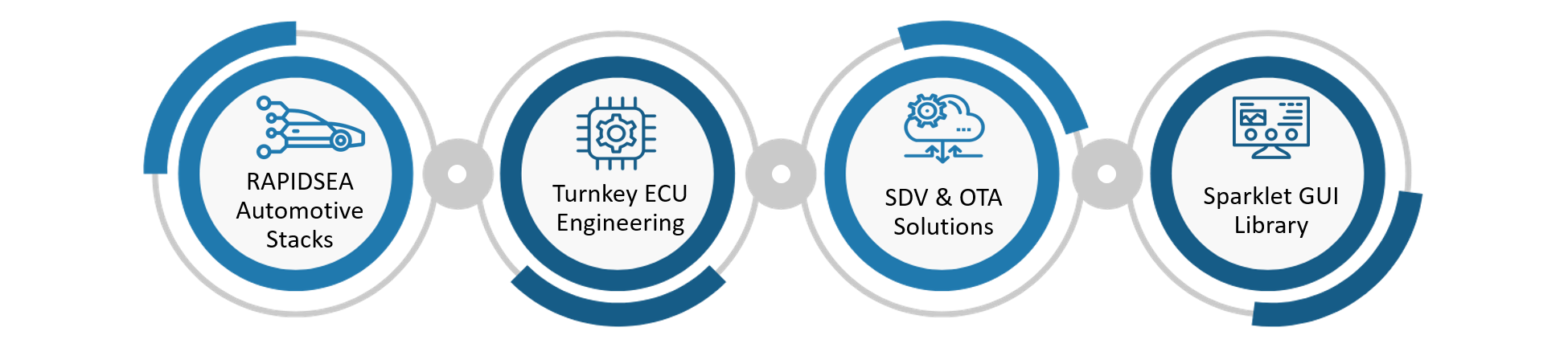
Core Automotive Embedded Systems Engineering Capabilities
The next generation of vehicles will be judged by the resilience of the intelligence inside them. Automotive embedded systems that combine High-Redundancy System Design, mission critical embedded systems principles, and continuous OTA capability are the foundation of the software-defined automotive future. Whether navigating the transition to zonal architecture or implementing a secure update strategy, purpose-built automotive embedded software development services with deep hardware expertise are the strategic differentiator for OEMs and Tier 1 suppliers building the next generation of vehicles.

Embien’s Edge Computing Services enable low-latency processing, real-time decision-making, and resilient architectures essential for next-generation connected and software-defined vehicles.

Embien’s Embedded Software Development Services enable resilient vehicle platforms with real-time performance, reliable communication, and robust software architectures for next-generation automotive systems.
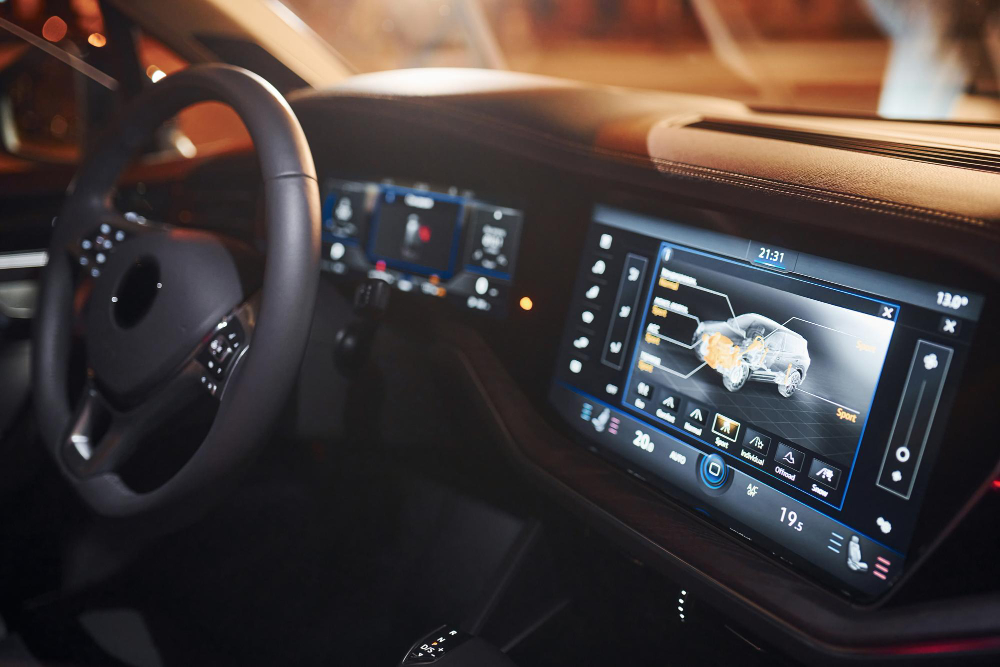
A case study on triple-display automotive integration demonstrating expertise in resilient embedded software development for next-generation vehicle HMI systems.