
In the ever-evolving landscape of automotive technology, the Passive Entry Passive Start (PEPS) system has emerged as a game-changer, revolutionizing the way we interact with our vehicles. As an evolution over the Remote Keyless Entry System, this advanced Passive Entry Passive Start System seamlessly combines convenience, security, and cutting-edge engineering, offering a truly hands-free driving experience.
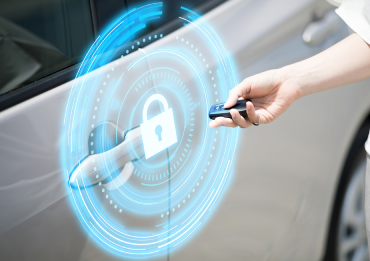
At its core, the Passive Entry Passive Start System eliminates the need for traditional keys, replacing them with a sophisticated electronic key fob. The beauty of this system lies in its simplicity. As the authorized user approaches the vehicle, the PEPS system automatically unlocks the doors, allowing effortless entry. Once inside, the driver can start the engine with just the push of a button, without ever having to remove the key fob from their pocket or purse.
The Passive Entry Passive Start System boasts a myriad of functionalities that enhance the overall driving experience. Let's delve into some of its key features:
The PEPS system allows you to unlock and lock your vehicle without ever having to physically touch the key fob. As you approach the vehicle, the Passive Entry Passive Start System detects the presence of the authorized fob and automatically unlocks the doors, granting you seamless access.
Once inside the vehicle, the PEPS system recognizes the presence of the authorized fob and enables the engine to start with a simple push of a button. No more fumbling with keys or inserting them into the ignition — it's a truly hands-free experience.
Many Passive Entry Passive Start Systems offer customizable settings, allowing you to tailor the system's behavior to your preferences. For instance, you can adjust the unlocking radius, enabling the doors to unlock when you're within a certain distance from the vehicle.
PEPS systems employ advanced encryption and rolling code technology to prevent unauthorized access or engine starts. The Passive Entry Passive Start System ensures that only authorized key fobs can interact with the vehicle, providing an additional layer of security against theft or unauthorized use.
The hardware architecture of PEPS System comprises several key components that work in harmony to deliver its seamless functionality. A solid understanding of the hardware architecture of PEPS System is vital for any team tasked with developing or certifying this technology.

Passive Entry Passive Start System
Let's explore these components of the hardware architecture of PEPS System:
The key fob is the heart of the Passive Entry Passive Start System. It houses a low-frequency (LF) transmitter and a radio frequency (RF) transceiver, enabling it to communicate with the vehicle's on-board computer. The key fob also contains a unique identification code that is used for authentication purposes.
The vehicle is equipped with LF antennas strategically placed around its perimeter. These antennas continuously transmit low-frequency signals, which are received by the key fob when it's within a certain range. This communication initiates the unlocking process.
In addition to the LF antennas, the vehicle also has RF antennas installed inside the cabin. These antennas facilitate two-way communication between the key fob and the on-board computer, enabling functions such as engine start and other vehicle settings.
The BCM acts as the central processing unit for the Passive Entry Passive Start System. It receives and processes signals from the LF and RF antennas, authenticates the key fob, and executes the appropriate actions, such as unlocking doors or enabling the engine start.
The immobilizer is a crucial security component within the hardware architecture of PEPS System that prevents the engine from starting without proper authentication. It communicates with the BCM and only allows the engine to start when an authorized key fob is detected.
The operation of passive entry passive start system is a choreographed dance of wireless communication and secure authentication. The operation of passive entry passive start system must be both seamless for the user and highly resistant to relay and replay attacks. Let's break down the process:
As you approach the vehicle with the authorized key fob, the LF antennas continuously transmit low-frequency signals. When the key fob receives these signals, it responds with its unique identification code, initiating the unlocking process.
The BCM receives the key fob's identification code and verifies its authenticity. If the code is valid, the BCM sends a command to the door lock actuators, causing the doors to unlock automatically.
Once inside the vehicle, the key fob establishes an RF connection with the on-board computer. When the driver presses the start button, the BCM authenticates the key fob's presence and sends a signal to the immobilizer, allowing the engine to start.
Throughout the driving experience, the Passive Entry Passive Start System continuously monitors the presence of the authorized key fob. If the fob moves out of range or is no longer detected, the system may initiate safety measures, such as preventing the engine from restarting or locking the doors.
All communication between the key fob and the vehicle's on-board computer is encrypted and employs rolling code technology. This ensures that each transmission is unique and cannot be replicated, providing an additional layer of security against potential hacking attempts.
The full operation of passive entry passive start system depends on tight synchronization between the LF ranging subsystem, the RF authentication channel, and the BCM — each of which must meet latency and reliability requirements defined in the vehicle's functional safety plan.
Secure key fob development for the Passive Entry Passive Start System introduces additional complexity compared to basic RKE fobs because the key must respond autonomously to LF wake-up signals while maintaining ultra-low power consumption. Secure key fob development teams must implement UWB-based precise ranging (per CCC Digital Key specification) to counter relay station attacks, which are a particular concern for PEPS systems. Our product regulatory compliance services ensure that the key fob and vehicle-side hardware meet FCC, CE, and UNECE R116 requirements throughout the secure key fob development lifecycle.
Applying structured automotive ECU Engineering methodology to the BCM software in a Passive Entry Passive Start System ensures that authentication latency, fail-safe behavior, and FOTA update paths are all governed by a validated software architecture. Automotive ECU Engineering practices — including model-based design, AUTOSAR compliant stacks, and HIL regression testing — reduce integration risk when the hardware architecture of PEPS System evolves across vehicle platforms. Our product DFM and sustenance engineering services support long-term maintainability of PEPS hardware, covering component obsolescence management and design-for-manufacture improvements.
While the Passive Entry Passive Start System offers unparalleled convenience and security, its design and implementation are not without challenges. Let's explore some of the key obstacles faced by engineers and manufacturers:
Ensuring reliable communication between the key fob and the vehicle's antennas can be challenging, especially in environments with potential interference or obstructions. Designers must carefully consider factors such as signal strength, antenna placement, and shielding to ensure consistent performance.
The key fob and the vehicle's on-board systems must strike a delicate balance between power consumption and functionality. Excessive power drain can lead to premature battery depletion, while insufficient power may result in communication failures or system malfunctions.
As with any wireless system, the Passive Entry Passive Start System is susceptible to potential security vulnerabilities, such as signal jamming, relay attacks, or hacking attempts. Manufacturers must continuously update and enhance security protocols to stay ahead of evolving threats.
Designing a user-friendly and intuitive PEPS system is crucial for widespread adoption. Engineers must ensure that the system's behaviour is consistent, predictable, and aligns with user expectations, minimizing potential confusion or frustration.
The Passive Entry Passive Start System represents a significant leap forward in automotive convenience and security. By eliminating the need for traditional keys and offering a truly hands-free driving experience, this technology has revolutionized the way we interact with our vehicles. Mastering the hardware architecture of PEPS System, ensuring robust operation of passive entry passive start system flows, and applying disciplined secure key fob development are the three pillars of a successful PEPS program. Embien’s Edge Computing Services enhance PEPS systems with low-latency processing, real-time authentication, and secure vehicle-edge data handling.
As we continue to embrace innovation and technological advancements, the future of PEPS systems holds tremendous promise. From biometric authentication and smartphone integration to autonomous vehicle integration and V2X communication, the possibilities are endless.

Embien is a specialist embedded engineering company delivering automotive ECU, PEPS, and connected vehicle solutions for global OEMs and Tier-1 suppliers.

Embien's electro-mechanical design services cover hardware architecture, PCB design, and system integration for automotive electronic modules including PEPS and RKE systems.
A case study on Embien's secure key fob development for a production-grade remote keyless entry system, covering RF design, cryptography, and compliance testing.