
An automotive instrument cluster is a vital component that provides drivers with essential information about the vehicle's performance. The vehicle dashboard serves as the primary interface between the driver and the various systems and functions of the vehicle. With a collection of gauges, indicators, and displays, the vehicle dashboard provides the driver with essential information about the vehicle's speed, engine RPM, fuel level, temperature, and other important metrics.
In modern vehicles, the vehicle dashboard has evolved from simple analog displays to more sophisticated digital displays. These digital clusters utilize advanced technology to provide a wide range of information in a clear and concise manner, often incorporating features such as customizable layouts, high-resolution screens, and interactive graphics — forming what is increasingly called an interactive instrument cluster.
An automotive instrument cluster, also known as a vehicle dashboard or head unit, is a panel located within the driver's line of sight. Its functionality goes beyond simply displaying information. It acts as the central hub for the vehicle's electronic systems, gathering data from various sensors and modules and presenting it to the driver in a meaningful way. The vehicle head unit communicates with the engine control unit, transmission control unit, and other vital systems to ensure smooth operation and optimal performance.
In addition to displaying speed, fuel level, and other basic metrics, the modern vehicle dashboard can also provide navigation information, entertainment controls, and vehicle diagnostics. It can even display real-time data from advanced driver-assistance systems (ADAS) such as adaptive cruise control and lane-keeping assist — making it a true automotive dashboard with real-time data drawn from across the vehicle's sensor network.
The most common components found in the vehicle dashboard are gauges, speedometers, and tell-tales. Gauges are one of the primary components of an analog instrument cluster. They provide real-time measurements of various parameters such as engine temperature, fuel level, and oil pressure. These gauges typically employ a mechanical mechanism, such as a needle or a rotor, to indicate the readings.
The speedometer measures the vehicle's speed. It utilizes a mechanical linkage connected to the vehicle's transmission to determine the speed and then displays it on the vehicle dashboard. This mechanical connection was prone to inaccuracies and required regular calibration.
The tachometer or RPM meter provides information about the speed of the engine. The odometer shows the distance travelled over the life of the vehicle.
Tell-tales, also known as warning lights, are indicators that illuminate to alert the driver of any issues or malfunctions. These lights are connected to sensors throughout the vehicle and provide visual cues for critical events such as low fuel, engine overheating, or brake system failure.
Designing a vehicle dashboard involves careful consideration of several factors to ensure optimal functionality and user experience. Some key design considerations include:
Effective cluster development for a vehicle dashboard involves multiple engineering disciplines working in concert: hardware bring-up, BSP development, CAN/LIN protocol integration, HMI framework selection, and ADAS data visualization. A structured cluster development process begins with the display technology choice — segment LCD, TFT, or OLED — and then defines the MCU platform, graphics library, and communication architecture. Successful cluster development also requires compliance with regulatory standards from NHTSA, EU GSR, and ARAI covering mandatory tell-tales and icon specifications. Our product engineering services cover end-to-end cluster development from initial architecture and schematic design through firmware, HMI software, and production validation for OEMs across automotive, two-wheeler, and EV segments.
The visual layer of a vehicle dashboard is realized through automotive HMI development with embedded tech — combining embedded C/C++ firmware with graphics engines, widget libraries, and state-machine-driven UI logic. Modern automotive HMI development with embedded tech leverages frameworks such as Qt, Sparklet, or Altia to reduce handcrafted rendering code and enable designer-friendly tooling. Automotive HMI development with embedded tech for the vehicle dashboard must also address performance — maintaining smooth refresh rates on the main display while simultaneously processing CAN messages from dozens of ECUs. Embien's Sparklet embedded GUI library is purpose-built for this challenge, offering a low-code IDE and platform-independent runtime for interactive instrument cluster development.
Vehicle head units are subject to various regulatory requirements to ensure standardization and safety. Regulatory bodies such as the National Highway Traffic Safety Administration (NHTSA), the European Union's General Safety Regulation (GSR) and Automotive Research Association of India (ARAI) define guidelines for vehicle dashboard design and functionality. These regulations cover aspects such as the placement of critical information, the maximum allowable distraction time, and the display of warning symbols. Compliance with these regulations is essential for vehicle manufacturers to ensure their products meet the necessary safety standards.
For example, in the USA, the Federal Motor Vehicle Safety Standards document (05-16325) stipulates the mandatory information to be present on the vehicle dashboard, recommended iconography for these items as well as the colours to be used. In India AIS_071 specifies similar requirements. Similarly, there are regulations available for each country the vehicle is being sold to.
The modern interactive instrument cluster goes far beyond a static gauge layout. Acting as an automotive dashboard with real-time data, it streams live ADAS alerts, navigation cues, battery state-of-charge, and connectivity status — all within a single glanceable view. Designing an interactive instrument cluster that is both information-rich and distraction-compliant is the core challenge of automotive HMI development with embedded tech today.
At Embien, we specialize in the design and development of cutting-edge automotive instrument clusters. Our team of experienced engineers and designers combines technical expertise with a deep understanding of user needs to create vehicle head units that are both functional and visually appealing.
We work closely with vehicle manufacturers to tailor instrument clusters to their specific requirements, ensuring seamless integration with the overall vehicle dashboard design. Our commitment to quality and innovation — backed by extensive cluster development experience — has made us a trusted partner in the automotive industry.
Automotive instrument clusters are an essential part of a vehicle's dashboard, providing drivers with critical information about their vehicle's performance and health. From the basic analogue displays to the advanced digital clusters of today, vehicle dashboards have evolved to meet the growing demands of drivers. With continuing evolution, the vehicle dashboard is expected to become more advanced and more deeply integrated in the coming few years.

Embien's cross-domain embedded expertise covers end-to-end cluster development — from vehicle dashboard hardware design and CAN/LIN integration to automotive HMI development with embedded tech for OEMs worldwide.

Embien's embedded software development services cover BSP bring-up, CAN/LIN stack integration, and automotive HMI development with embedded tech for vehicle dashboard and cluster programs.
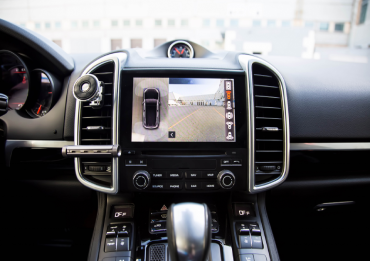
A case study on Qt-based camera integration and dynamic image rendering for automotive displays — showcasing Embien's automotive HMI development with embedded tech capability for interactive instrument cluster programs.