
In the previous article, we explored the AI core in an emotionally intelligent car. Now let us look into the personalization layer — the part of the AI system that creates a truly personalized driving experience for each driver.
The human-facing part of the AI system in the EI car is the personalization layer. It adapts itself to driver behaviour and is the engine behind the personalized driving experience that makes each EI car feel uniquely suited to its owner. Let us explore some of the features that will be personalized.
Driving is a complex mechanism where multiple factors come into picture. Each of us drives based on our own experience, innate personality and emotions. Emotionally intelligent cars will learn from the human-driver how he likes to drive. The system will understand when the driver wants to hurry and when he wants to go with the flow. Whether he prefers to feel the raw power of the car or is fine with refined finesse. Is he OK to wait in slow-moving traffic or will he spend more on fuel and toll roads to keep moving? How aggressive can the drive be? What is his safe distance? The personalized driving experience layer maps all of these preferences into driving behaviour.
As human behaviour is not always the same, the personalized driving experience adapts based on emotional state — empathizing with the driver and adjusting driving behaviour to match his current mood. Emotionally intelligent cars are unique in their ability to do this without any manual input from the driver.
The personalized driving experience extends well beyond driving style into the entire cabin environment. Digital cockpit design is what makes this possible — defining how every surface, speaker and sensor in the cabin cooperates to sense and respond to the driver's state. Emotionally intelligent cars can understand what the driver likes to listen to in different moods, and learn what he desires to see. They can adjust mood lights to brighten him up, play calming music to smoothen his nerves, or pump up the volume to further brighten his day. Seats will be adjusted for posture, driving speed and emotional state. The air conditioner will be turned on and temperature set at preferred levels even before the driver enters.
Connected cars take digital cockpit design further — sharing preference data across trips, syncing with wearables and smart home systems, and continuously enriching the personalized driving experience with data from the owner's broader digital life.
Conversational interfaces of emotionally intelligent cars will be so advanced that interacting with them will feel like speaking to a fellow human. As humans have vision as a primary sensory feature, the cluster and infotainment system will remain an important interface — one that can occupy larger space dynamically as the user wants. Digital cockpit design in a fully autonomous car can replace the conventional windshield view with a full-screen movie, video conference or interactive display. The personalized driving experience includes this fully adaptive digital cockpit design that conforms to driver preferences in real time.
While the algorithms for the personalization layer belong to the car manufacturer, future regulations will enforce privacy on the associated data, making the user the sole owner of it. This data could be standardized and sharable across vehicles — just like a Google account, one can upload preferences to cloud and download them to any car. When a driver changes their car, the new EI car will understand them just as the last one did. The personalized driving experience transfers seamlessly.
Delivering a truly personalized driving experience requires a driver-centric HMI that reads the driver's intent, mood and physical state — not just his button presses. A sophisticated driver-centric HMI uses cameras, voice recognition, biometrics and touch to build a continuous picture of the driver's needs. Embien's digital transformation services help OEMs design and integrate this driver-centric HMI layer into their EI car platforms.
Personalization is not a one-time configuration — it evolves with the driver. Connected car technology enables the EI car to continuously update its understanding of the driver, push preference updates across devices and receive AI model improvements over the air. This makes the personalized driving experience a living, growing relationship between the car and its owner. Edge AI development ensures the most critical personalization decisions run locally, protecting driver privacy while delivering the lowest possible response latency.

Discover how Embien's cross-domain embedded expertise helps OEMs build the personalization layer in emotionally intelligent cars — delivering a personalized driving experience across connected cars platforms.

Embien's UI/UX design services create the driver-centric HMI interfaces that power the personalized driving experience in emotionally intelligent cars — adaptive, intuitive and privacy-aware.
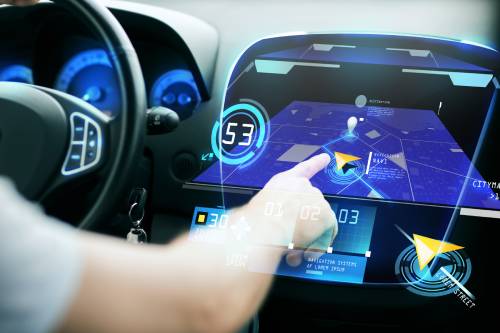
A case study on rapid automotive HMI development using Flint — demonstrating the driver-centric HMI and personalized driving experience capabilities Embien brings to connected cars.