
Even though full autonomous driving will be here soon, we, human beings, will want to drive and exercise control over the vehicle. We will want to push the car to feel the adrenaline rush. Driver monitoring systems are the technology that will decide how, when and how much the human stays in control. Let us see how emotionally intelligent cars will navigate the age of autonomy.
One of the good things about driving yourself to the office is that your mind can escape from the usual pressures — work, family — and focus on the road. Whether you like it or not, driving takes you to a different world and provides a temporary escape from reality.
What will we do when fully autonomous cars drive us to the office? More work? I doubt it. More music or movies? I doubt it. More conversations with friends or family? I doubt it. Though the premise of autonomous driving sounds interesting today, we may end up in another technological prison.
On the legal front, if the OEM is liable for damages in self-driving mode, imagine how cautious — and therefore dull — the autonomous driving experience could become.
If 100% autonomous driving is mandated, the concept of the conventional personal car may cease to exist. With a focus on sustainability, a more optimal transport model may emerge — you may own a pod, sit in it, and a centrally administered transport management system will employ different mechanisms to safely move you from one location to another. Emotionally intelligent cars could become the last bastion of the personal driving experience in this future.
So, either personal transport as we know it today will cease to exist, or there will still be a need for a human component in driving. Those who today push for full autonomy may eventually advocate for human-empowered driving — we may even need to subscribe for the manual driving option.
This is exactly where emotionally intelligent cars and driver monitoring systems come to the rescue. Driver monitoring systems embedded in the EI car will continuously assess the driver's state, readiness and desire to drive — allowing humans to take the wheel when and how they choose, under a safety umbrella managed by the car itself.
Driver monitoring systems alone are not enough — as autonomous driving embedded platforms become standard, the experience of taking or ceding control must feel natural and empowering. A sophisticated driver-centric HMI bridges the gap between the driver's intention and the car's response, making the handoff between autonomous driving embedded control and human input seamless. Driver monitoring systems continuously assess whether the driver is ready, willing and able to take the wheel.
Steering wheel hands-off detection is one example of how driver monitoring systems interact with autonomous driving embedded logic — the car automatically adjusts the autonomous level based on hand placement, a subtle continuous negotiation between human and machine. The EI car could also gamify the experience: setting checkpoints, suggesting optimal lanes, or prompting the driver to maximise fuel efficiency — all under the supervision of driver monitoring systems that keep safety paramount. In the era of autonomous driving embedded vehicles, driver monitoring systems are the mechanism that preserves the joy of human driving.
When the EI car determines that the driver wants a distraction from his routine, driver monitoring systems can prompt him to take over the wheel and remind him why driving can be joyful. Emotionally intelligent cars will act as partners in the driving experience — not autonomous driving embedded systems that simply replace the human entirely.
Driver monitoring systems in emotionally intelligent cars are not just gatekeepers — they are enablers of the personalized driving experience. By continuously reading the driver's emotional and physical state, driver monitoring systems allow the EI car to adapt its response, safety margins, and driving style to suit the individual at every moment. Embien's edge computing services power the real-time inference pipelines that make driver monitoring systems fast and reliable enough for safety-critical automotive use.
As the classical Freudian psychoanalytic theory suggests, the death drive in us will always want to control the car. It will be fascinating to see how humans and emotionally intelligent cars adapt as autonomous connected cars become a reality. Automotive user experience design will play a crucial role in ensuring that driver monitoring systems feel empowering rather than restrictive — turning safety into a feature that connected cars drivers actually want.

Embien’s Product Engineering Services enable emotionally intelligent vehicle experiences through adaptive electronics, intelligent HMI integration, and personalized automotive system development.
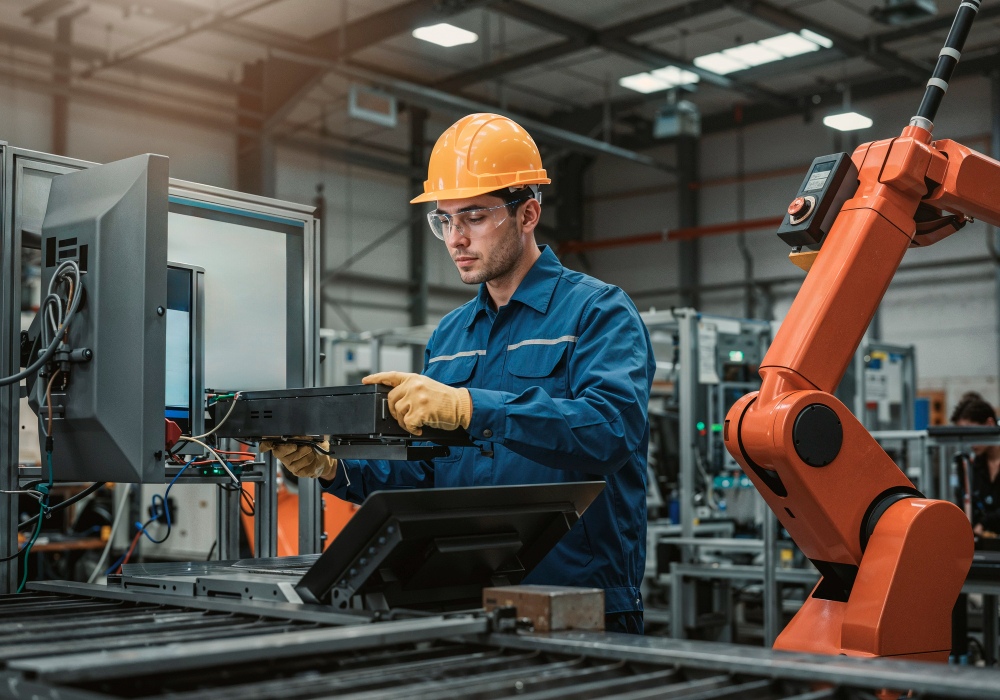
Explore how Embien's electronic manufacturing services support the hardware layer of driver-centric HMI and driver monitoring systems in emotionally intelligent cars.
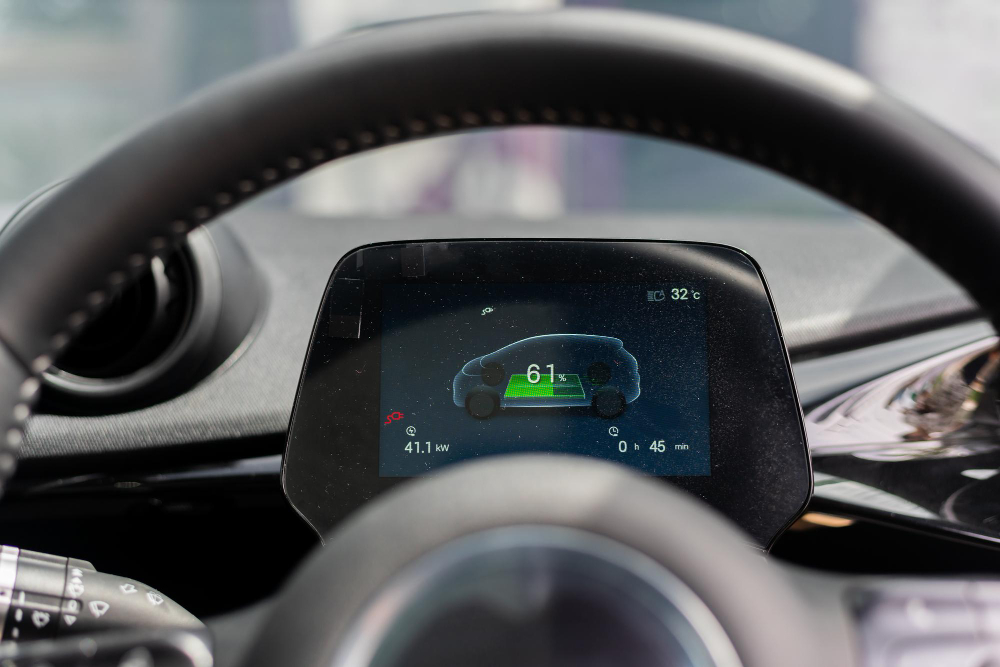
A case study on Embien's EV instrument cluster design — showcasing the driver-centric HMI and driver monitoring systems integration that defines emotionally intelligent car dashboards.