
Introduction
A patient monitor in a hospital has a nurse nearby, a reliable power outlet, hospital-grade Wi-Fi, and IT staff who can troubleshoot a connectivity drop. A remote patient monitoring device in someone's home has none of those things by default, it has to work reliably in exactly the environment a healthcare IoT device development company has the least control over. Designing remote patient monitoring devices for home healthcare use means engineering around the absence of every support structure a clinical-setting device could previously assume.
In short: embedded engineering challenges in home healthcare device design come down to designing for a user, an environment, and a support model with none of the guarantees clinical-grade design typically relies on, connectivity, technical literacy, and immediate support all have to be assumed absent, not present.
How Home-Use Requirements Differ From Clinical-Setting Design Assumptions
Clinical-setting devices can assume trained staff nearby to interpret alerts, troubleshoot connectivity, and physically reposition or recharge a device. Home-use devices have to assume none of that: the patient, who may have limited technical literacy, physical limitations, or cognitive impairment depending on the population, is the only person who will interact with the device day to day. This reframes almost every design decision, from how an alert is communicated (a hospital's central monitoring station versus a patient who needs to understand what an alert means and what to do about it) to how a low-battery or connectivity-loss condition is handled (a hospital's biomedical engineering team versus a patient who has to resolve it themselves or the device has to degrade gracefully without intervention).
Connectivity Reliability Without IT Support Present
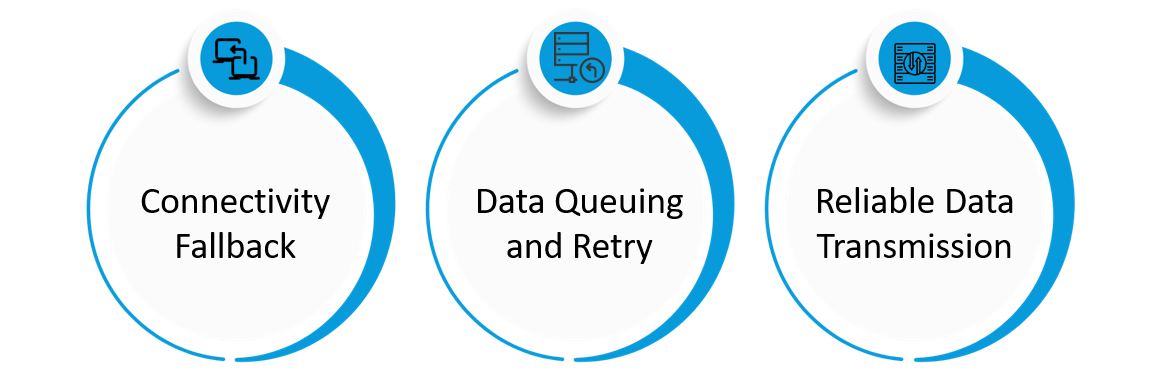
A home environment's connectivity is unpredictable in ways a clinical network isn't: Wi-Fi credentials change, routers get reset, and cellular coverage varies by location in ways no design team can control for uniformly. Devices intended for home healthcare use benefit from connectivity architectures with a fallback path, cellular as a backup to Wi-Fi, or a low-power, long-range protocol like LoRa that doesn't depend on the patient's home network infrastructure at all for basic functionality. Designing the device to queue and retry data transmission gracefully through a connectivity gap, rather than silently losing readings or requiring a patient to notice and manually retry, is what actually determines whether the device generates a usable clinical data stream over months of real-world home use.
Battery Life and Charging Design for Non-Technical Users
Battery and charging design for a home-use wearable has to account for a user who may forget to charge it, may not notice a low-battery warning, or may find a charging routine genuinely difficult to manage. This pushes toward longer battery life targets than an equivalent clinical device might need, sufficient to tolerate a missed charging cycle without a monitoring gap, aggressive power management throughout the sensor and communication stack to make that battery life achievable, and charging mechanisms simple enough, a dock rather than a cable that has to be correctly oriented and inserted, to reduce the chance of a device sitting uncharged simply because charging it was more friction than an elderly or non-technical user could manage reliably.
Data Security and Privacy for Health Data Leaving a Clinical Network
Health data traveling from a patient's home, over their own internet connection or a cellular link the manufacturer controls, to a cloud platform and eventually back to a clinical team, crosses trust boundaries a hospital-network-only device never has to cross. This demands encryption in transit and at rest as a baseline, device-level authentication so a compromised or spoofed device can't inject false readings into a patient's record, and a clear data-handling architecture that satisfies HIPAA (or the equivalent regional health-data regulation) despite the data's path running through infrastructure entirely outside a hospital's own network perimeter. Designing this data path deliberately, rather than treating security as a property to retrofit once the sensor and connectivity design is finished, avoids costly rework once compliance review actually examines how data moves from device to clinician.
Usability Engineering for Elderly or Non-Technical Patients
Usability engineering under IEC 62366 for a home-use device has to account for a use population a clinical device doesn't: patients who may have reduced dexterity, vision, hearing, or cognitive capacity, using the device unsupervised, often for the first time, without a clinician present to correct a misuse. This pushes toward physical designs with minimal required interaction, a single button or fully automatic operation rather than a multi-step setup sequence, and alert mechanisms, visual, audible, haptic, chosen for the specific population's likely sensory limitations rather than a generic design assumption. Usability testing with representative home-use patients, not just internal staff or clinical volunteers, is what actually surfaces the friction points a device's intended population will encounter.
Regulatory Considerations Specific to Home-Use Devices
Home-use classification under both FDA and CE-MDR frameworks specifically considers the intended use environment, and a device intended for lay-person home use faces usability and labeling scrutiny a professional-use-only equivalent doesn't, regulators specifically evaluate whether an unsupervised, non-clinical user can operate the device safely and correctly. This affects everything from the depth of usability engineering documentation required to how home-use is validated during the clinical evaluation process, and building for home use from the start, rather than adapting a clinical-use device's regulatory file after the fact, avoids a costly reclassification of the usability evidence base late in a program.
Healthcare IoT Device Development: Embien's Sensor-to-Cloud Capability
Healthcare IoT device development: Embien's sensor-to-cloud capability spans exactly this challenge end to end, evidenced by our work developing a personal tracker technology demonstrator for a U.S. healthcare technology startup focused on autistic patient safety and location monitoring. That project combined LoRa for deep indoor signal penetration, BLE for home-zone proximity detection, GPS for outdoor tracking, a PPG sensor for health monitoring, and accelerometer-based activity sensing, all built on an NXP KW36A BLE SoC with optimized power management delivering five days of battery life in a wearable form factor, plus OTA firmware update capability so the device could be improved post-deployment without requiring the patient or caregiver to physically return it.
Why Choose Embien for Healthcare IoT Development?
Why choose Embien for healthcare IoT development? Because home healthcare devices demand the specific combination this work required: multi-protocol connectivity engineering (LoRa, BLE, GPS) reconciled into one power budget, health-sensor integration validated for real-world reliability, and firmware update infrastructure that lets a device improve over its deployed life without requiring a technically capable user to intervene. That combination of embedded hardware, connectivity, and cloud-integration expertise is exactly what a home healthcare device needs from its engineering partner.
Embien's Capabilities
Embien brings sensor-to-cloud healthcare IoT device development experience spanning wearable health monitoring, multi-protocol connectivity (LoRa, BLE, cellular), power-optimized firmware for extended battery life, and OTA update infrastructure, validated through real projects including a personal safety tracker for autistic patients built for a U.S. healthcare startup. Our engineering process integrates usability engineering and data security design from the start of a home healthcare device program.
To discuss a remote patient monitoring or home healthcare device program with an experienced healthcare IoT device development company, reach out to Embien's engineering team.