
As we push the boundaries of what's possible, we are met with a new set of challenges that demand innovative thinking and sophisticated solutions. Today's electronic devices are no longer just functional; they are expected to be smaller, more intelligent, perpetually connected, and incredibly power-efficient. For us at Embien Technologies, navigating these modern challenges—from embedded system miniaturization services to Edge AI embedded system development—is not just a necessity but a passion that drives our engineering endeavors.
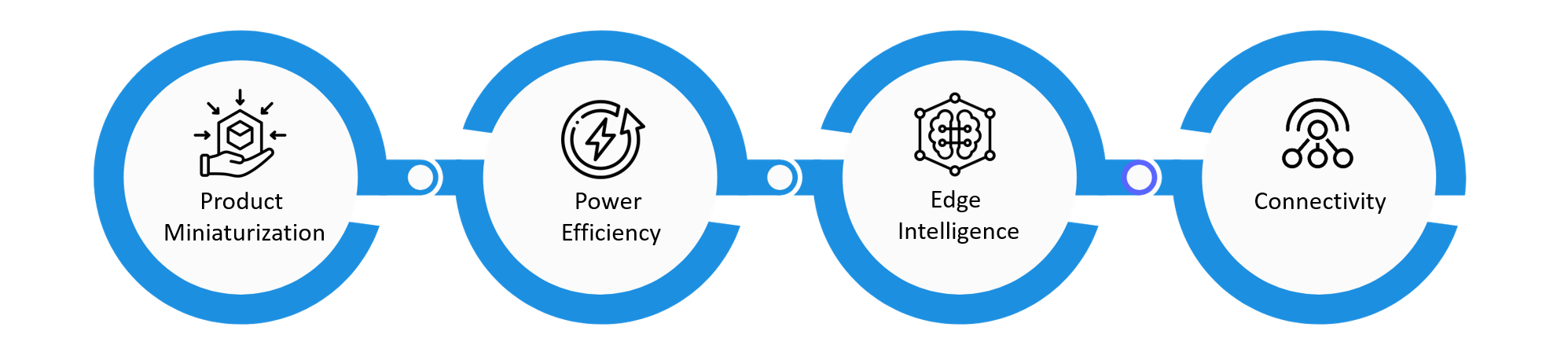
This article delves into the contemporary challenges of electronic product engineering – miniaturization, power efficiency, edge intelligence, and connectivity – and explores actionable solutions to overcome them. We will also shed light on key industry trends and showcase how Embien's innovative approaches in embedded system miniaturization services and low power embedded design services are helping our clients stay ahead of the curve.
Essential Boundary Management Practices
Product Miniaturization Maze: More Functionality in Less Space
The relentless demand for smaller, lighter, and more portable devices has put immense pressure on electronic design engineers. From sleek consumer electronics to life-saving medical wearables, the trend of miniaturization in electronics is ubiquitous. However, shrinking the form factor while enhancing functionality is a complex puzzle—and it is precisely where specialized embedded system miniaturization services deliver the most value. Proper hardware design for embedded systems is critical to achieving this without compromising reliability.
The Challenges:
- Component Density and Thermal Management: Packing more components into a smaller area leads to increased heat generation. Inadequate thermal management can severely impact performance and reliability.
- Signal Integrity: As the distance between components shrinks, the risk of signal interference and noise increases, potentially leading to malfunctions.
- Manufacturability and Rework: Working with minuscule components requires advanced manufacturing processes and makes rework or repairs incredibly challenging and costly.
- Power Supply Miniaturization: The power source itself needs to shrink without compromising on capacity or safety, a significant engineering feat.
Actionable Solutions and Embien's Approach:
To navigate the miniaturization maze, a multi-faceted approach is essential. At Embien, we leverage advanced design techniques and a deep understanding of material science to overcome these hurdles as part of our embedded system miniaturization services.
- High-Density Interconnect (HDI) PCBs: We utilize HDI PCB designs with microvias and finer traces, allowing for more compact and dense component placement while maintaining signal integrity.
- System-in-Package (SiP) and 3D Integration: By integrating multiple dies and passive components into a single package, SiP technology significantly reduces the overall footprint.
- Advanced Thermal Management: Our team employs sophisticated thermal simulation and analysis tools to identify potential hotspots early in the design phase. We implement solutions like thermal vias, heat pipes, and advanced heat sink designs to ensure optimal operating temperatures.
- Component Selection and Layout Optimization: We meticulously select low-profile components and optimize the layout to minimize signal path lengths and reduce electromagnetic interference (EMI). Our expertise in RF and high-speed digital design is crucial in this aspect.
A prime example of our success in miniaturization is our work on a series of medical wearables, where our embedded system miniaturization services reduced board size by over 40% without functional compromise.
The Power Efficiency Imperative: Doing More with Less
As devices become more feature-rich and are often powered by batteries, power efficiency is no longer an afterthought but a primary design consideration. Our low power embedded design services address this directly—the demand for longer battery life and reduced energy consumption is a critical challenge, especially in the context of IoT and portable electronics.
The Challenges:
- Balancing Performance and Power Consumption: High-performance processors and peripherals often come with a significant power penalty.
- Leakage Current in Deep-Sleep Modes: Even when a device is in a low-power state, leakage current can drain the battery over time.
- Inefficient Power Conversion: The efficiency of power conversion from the source to the various components can have a major impact on overall power consumption.
- Software and Firmware Overhead: Inefficient code and frequent processor wake-ups can lead to unnecessary power drain.
Actionable Solutions and Embien's Approach:
Achieving optimal power efficiency requires a holistic approach that spans hardware design, firmware development, and system-level optimization. This is the foundation of our low power embedded design services.
- Low-Power Design Techniques: We employ various low-power design strategies, including clock gating, power gating, and dynamic voltage and frequency scaling (DVFS).
- Intelligent Power Management Firmware: Our firmware engineers are adept at developing sophisticated power management algorithms. We ensure the system spends the maximum possible time in the deepest sleep states.
- Optimized Software Architecture: By designing event-driven software architectures, we minimize the need for continuous polling, which keeps the processor in a high-power state. We also focus on writing clean, efficient code to reduce the computational load.
In one of our recent projects, our low power embedded design services enabled a battery-powered pet wearable to run for months on a coin cell battery.
The Dawn of Edge Intelligence: Processing at the Source
The proliferation of IoT devices has led to an explosion of data. Sending all this data to the cloud for processing is often impractical due to latency, bandwidth, and privacy concerns. This has given rise to Edge AI embedded system development, where data processing and AI-powered decision-making happen directly on the device. Discover our Edge Computing Services for real-time embedded inference solutions.
The Challenges:
- Hardware Constraints: Edge devices are often resource-constrained in terms of processing power, memory, and energy.
- Model Optimization: Deploying complex machine learning models on edge devices requires significant optimization to reduce their size and computational requirements.
- Data Management and Security: Managing and securing data at the edge is a critical concern, especially in sensitive applications.
- Power Consumption of AI Algorithms: Running AI algorithms can be power-intensive, posing a challenge for battery-operated edge devices.
Actionable Solutions and Embien's Approach:
At Embien, we are at the forefront of Edge AI embedded system development, helping our clients build intelligent and autonomous edge devices.
- Heterogeneous Computing Architectures: We leverage system-on-chips (SoCs) with heterogeneous computing architectures that include CPUs, GPUs, and dedicated neural processing units (NPUs).
- Model Pruning and Quantization: ML engineers are experts in optimizing machine learning models for edge deployment. We use techniques like pruning (removing unnecessary model parameters) and quantization (reducing the precision of model weights) to create lightweight and efficient models.
- TinyML and Embedded AI Frameworks: We have extensive experience with TinyML frameworks like TensorFlow Lite for Microcontrollers, enabling us to run AI on even the most resource-constrained devices as part of our Edge AI embedded system development practice.
We have successfully implemented Edge AI embedded system development solutions for various applications, including predictive maintenance in industrial machinery and driver monitoring systems in automotive.
Conquering Connectivity Challenges: The Unseen Backbone
In our hyper-connected world, seamless and reliable connectivity is non-negotiable. Modern electronic products are expected to connect to the internet, to each other, and to the cloud. IoT connectivity using BLE, Zigbee, LoRa and other protocols forms the backbone of modern embedded products. However, ensuring robust and efficient connectivity presents its own set of challenges.
The Challenges:
- Choosing the Right Wireless Technology: With a plethora of wireless technologies available (Wi-Fi, Bluetooth, LoRaWAN, Cellular, etc.), selecting the most appropriate one for a given application is crucial. IoT connectivity using BLE, Zigbee, LoRa each offers distinct trade-offs in range, power, and data rate.
- Antenna Design and Integration: The performance of a wireless device is heavily dependent on its antenna. Designing and integrating an effective antenna within a small form factor can be challenging.
- Coexistence and Interference: In crowded wireless environments, ensuring that a device can operate reliably without being affected by interference from other devices is a major concern.
Actionable Solutions and Embien's Approach:
Embien has a proven track record of designing and developing robust and reliable connected devices.
- Expertise in a Wide Range of Wireless Protocols: Our team has in-depth knowledge of various wireless protocols, enabling us to choose the optimal solution based on factors like range, data rate, power consumption, and cost.
- Advanced Antenna Simulation and Design: We use sophisticated simulation tools to design and optimize antennas for performance and efficiency, even in challenging form factors. We also have extensive experience in antenna tuning and matching to ensure optimal wireless performance.
- Coexistence and Interference Mitigation Strategies: We employ various techniques to mitigate interference, such as frequency planning, using shielded components, and implementing adaptive frequency hopping algorithms.
- Low-Power Communication Protocols: We leverage low-power communication protocols like Bluetooth Low Energy (BLE) and LoRaWAN to minimize the power consumption of wireless communication, thereby extending battery life. This expertise in IoT connectivity using BLE, Zigbee, LoRa ensures the right technology is matched to each application.
A testament to our connectivity expertise is a large-scale industrial IoT deployment where we designed a network of sensors communicating over LoRaWAN.
The Road Ahead: A Future Forged by Innovation
The challenges in electronic product engineering are constantly evolving. Whether it is delivering advanced embedded system miniaturization services, applying low power embedded design services across wearables and IoT nodes, or pioneering Edge AI embedded system development for smarter autonomous devices, Embien Technologies is not just an observer—we are active participants in shaping the future. Our commitment to continuous learning, our deep expertise in hardware design for embedded systems, and our passion for innovation empower us to tackle the most complex challenges and deliver cutting-edge solutions to our clients.