
Embien's two existing BACnet articles, demystifying the BACnet protocol physical layers and BACnet message structure, object model, and PICS, cover BACnet's legacy physical layers in depth without addressing security, because those bacnet protocol physical layers genuinely have no built-in security model to describe. BACnet/IP broadcasts and unicasts messages over standard UDP with no authentication or encryption layer of its own, and bacnet ms tp, the RS-485-based serial physical layer common in field-level building automation, was designed decades ago around a trusted, physically-isolated wiring assumption that modern connected buildings, with remote access, cloud dashboards, and IT network convergence, no longer satisfy. Any device with physical or logical access to a legacy BACnet segment can read and typically write process data with no credential check at all, a gap that building security teams increasingly cannot accept as buildings become more connected.
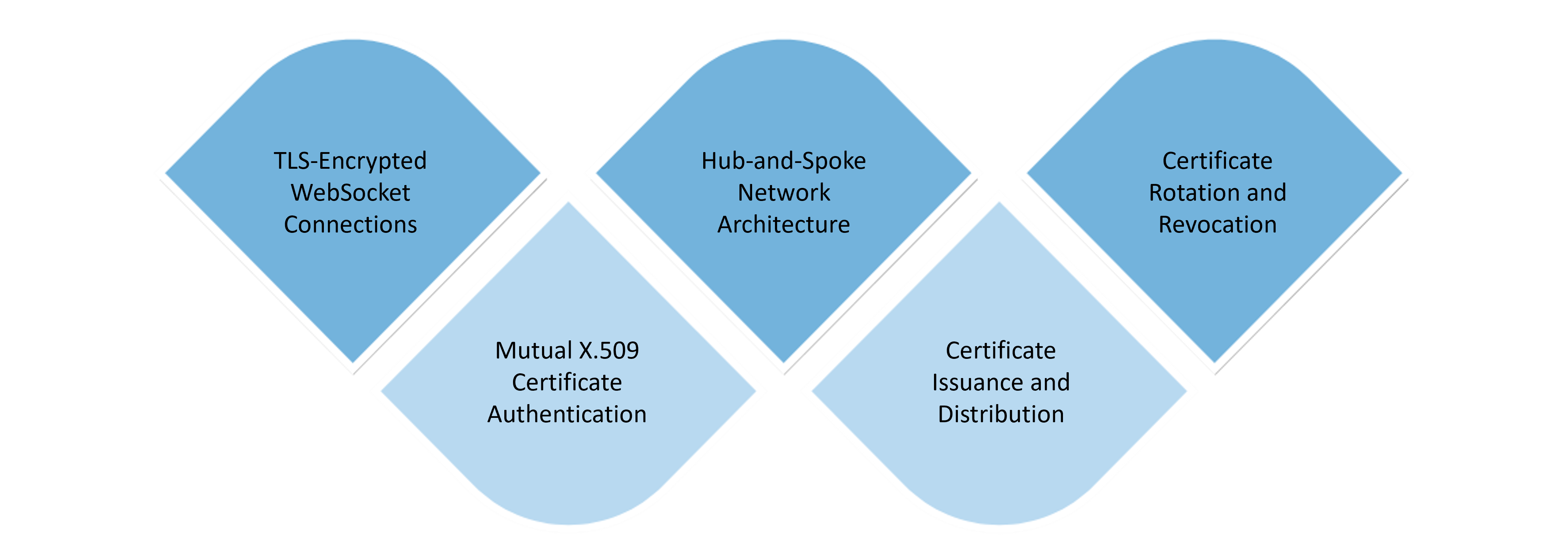
BACnet/SC, Secure Connect, is the modernized building automation protocol variant that finally closes this gap, standardized as an addendum to the BACnet specification. Rather than BACnet/IP's plain UDP broadcast model, BACnet/SC carries BACnet's same application-layer messages, object model, and services, the ones covered in Embien's BACnet message structure article, over TLS-encrypted WebSocket connections between devices, with mutual X.509 certificate-based authentication required before a device is accepted onto the network at all. Every message on a BACnet/SC network is encrypted in transit and every participating device is authenticated by certificate, addressing both the eavesdropping and unauthorized-access gaps that legacy BACnet/IP and BACnet MS/TP left entirely open.
BACnet/SC also changes the network's topology model. Legacy BACnet/IP relies heavily on broadcast messages, a model that works acceptably on a small, trusted local segment but scales poorly and adds attack surface as a building automation network grows or crosses IT network boundaries. BACnet/SC instead uses a hub-and-spoke architecture, where devices establish direct, authenticated WebSocket connections to one or more hub devices rather than relying on network-wide broadcasts, giving a building automation network a more IT-familiar, switch-routable topology that fits naturally alongside standard enterprise network segmentation practices instead of requiring BACnet's own broadcast domain to be carefully fenced off.
Mutual certificate authentication is BACnet/SC's core security mechanism, and it introduces a genuinely new operational discipline for building automation teams: issuing, distributing, and eventually rotating or revoking X.509 certificates across every controller, sensor gateway, and workstation on the network, at building scale rather than the handful of certificates a typical IT deployment manages. A building operator needs a certificate authority strategy, whether operating one internally or using a managed PKI service, and a clear device lifecycle process for provisioning a new controller's certificate during commissioning and revoking it cleanly when a device is decommissioned or replaced, since an unmanaged certificate is a security liability whether it belongs to a live device or a retired one still trusted by the network.
BACnet/SC is designed to coexist with legacy BACnet/IP and BACnet MS/TP rather than demand a wholesale forklift replacement of an existing building's controllers. BACnet/SC hub devices can bridge to legacy BACnet/IP segments, letting a building migrate incrementally, new construction and major controller replacements moving to BACnet/SC-native devices first, while legacy field-level MS/TP segments continue operating behind a bridging hub until their own natural refresh cycle. This incremental path matters in practice because a typical commercial building's controller population turns over gradually over many years, and a security upgrade strategy that requires simultaneous replacement of every device is rarely realistic for a facilities team to execute.
Bacnet/sc secure connect for building automation networks is best understood as one instance of a broader pattern this folder covers elsewhere: operational technology networks that were designed around trusted, physically-isolated assumptions now needing an explicit, standards-based security layer as they connect to IT networks and the internet. Embien's industrial IoT gateway security article covers the same underlying OT/IT segmentation and certificate-based authentication problem from an industrial gateway perspective, and the parallels between that architecture and BACnet/SC's certificate-authenticated, hub-based model are direct.
Embien Technologies develops embedded controllers and gateway firmware for building automation and industrial networks, including certificate-based device authentication, network segmentation, and secure remote-access design, drawing on our broader IT-OT convergence and ICS cybersecurity services. Our engineering treats a modern building automation protocol deployment's security architecture as a first-class design requirement rather than an add-on, whether the network is BACnet/SC, a segmented industrial gateway, or a mixed legacy-and-modern building network.
To discuss BACnet/SC migration or securing an existing building automation protocol deployment, reach out to Embien's engineering team.

Embien's product engineering services support the development of secure connected devices and embedded controllers, covering hardware and firmware engineering, communication protocol integration, gateway development, and secure system integration for industrial and building automation applications.

Embien's cybersecurity services help protect connected embedded products and industrial systems through secure communication, device authentication, certificate-based security, secure firmware, and network protection for connected devices and OT environments.

A case study on implementing secure device configuration using the POCO Web Server, highlighting embedded web-server integration and secure configuration capabilities relevant to connected controllers, gateways, and industrial devices.