
The shift towards the Software-Defined Vehicle (SDV) is not merely a trend; it is a fundamental restructuring of automotive architecture and development methodologies. As vehicles transform into high-performance computers on wheels, the traditional linear "V-model" of engineering is buckling under the pressure of exponential software complexity.
In this installment of "The Engineering Reality of Digital Twins," we explore how high-fidelity Automotive Digital Twins are becoming the essential prerequisite for rapid, reliable SDV Development. By moving validation from physical test tracks to virtual environments, we are bridging the critical gap between rigid hardware timelines and agile software requirements. Digital Twin technologies are driving innovation across automotive, industrial, healthcare, and other connected system domains.
The contemporary vehicle is defined less by horsepower and more by lines of code often exceeding 100 million lines in premium vehicles. The promise of the SDV is the ability to continuously upgrade performance, safety, and user experience long after the vehicle has left the factory.
However, the engineering reality is stark: developing complex, safety-critical software intended to run on hardware that may not yet physically exist is fraught with risk. Waiting for prototype mules to validate basic software stacks is a bottleneck the industry can no longer afford.
This is where the Automotive Digital Twin enters the fray. It is not just a 3D CAD model for marketing. It is a dynamic, physics based virtual representation of the vehicle’s systems, including powertrain, chassis, electrical architecture, and sensor suite, that behaves identically to its physical counterpart under varying conditions.
For developers and OEMs, the Digital Twin is the ultimate sandbox. It decouples software development from hardware dependency, allowing engineers to design, integrate, and validate features in a completely virtual environment, significantly accelerating time-to-market. Embien’s predictive maintenance with Digital Twin services leverage real-time vehicle data to anticipate failures and improve operational reliability.
The heart of the modern SDV, particularly in electric vehicles (EVs), is the battery pack. BMS Simulation via a high-fidelity Automotive Digital Twin allows engineers to model electrochemical and thermal behavior of cells with extreme accuracy — replacing hazardous, expensive, and slow physical cell testing with virtual validation. Developing BMS algorithms through BMS Simulation rather than physical testing is now an industry standard practice for EV programme acceleration.
A robust battery Automotive Digital Twin allows engineers to:
Simulate Corner Cases Safely: Test thermal runaway scenarios, extreme temperature operations, and short-circuit conditions without risking physical labs or personnel.
Accelerate Aging Tests:Compress years of battery degradation cycles into days of simulation to validate State of Health (SoH) and State of Charge (SoC) estimation algorithms.
Optimize Cell Balancing Logic:Virtually test active versus passive balancing strategies under dynamic load profiles derived from real-world driving data.
The twin provides the BMS software with realistic sensor inputs (voltage, current, temperature) as if it were connected to a real pack, allowing for mature software before the first prototype battery is even assembled.
Hardware-in-the-Loop (HIL) testing has long been a staple of automotive validation. However, traditional HIL often relies on simplified "plant models" that approximate the vehicle's behavior. In the era of ADAS and autonomous driving, approximations are insufficient.
The integration of Digital Twins transforms HIL Testing Services. Instead of generic models, the Electronic Control Unit (ECU) under test is connected to a high-fidelity Digital Twin running in real-time.
Consider validating an ADAS domain controller. A standard HIL rig might feed pre-recorded video data. A Digital Twin-based HIL setup, however, generates synthetic sensor data (LiDAR point clouds, radar returns, camera feeds) in real-time based on a virtual car driving through a photorealistic virtual world.
If the ECU commands emergency braking, the Digital Twin's vehicle dynamics model reacts instantly, the virtual sensors perceive the deceleration and pitch change, and this new reality is fed back to the ECU within milliseconds. This closed-loop fidelity is crucial for validating complex interactions between braking, steering, and perception systems, ensuring ISO 26262 functional safety compliance before on-road testing.
The defining characteristic of an SDV is the ability to receive Over-the-Air (OTA) software updates. While OTA offers immense value, the risk profile is staggering. Pushing a faulty update to millions of vehicles with slightly different hardware configurations can be catastrophic.
You cannot physically test every possible variant configuration. You need a virtual fleet.
Digital Twins enable massive parallel simulation of OTA campaigns. Before a new firmware version is pushed to the cloud, it can be deployed to thousands of virtual vehicle instances in the cloud, each representing different hardware revisions, mileage states, and environmental conditions.
We can simulate the entire update process, including downloading, unpacking, flashing, and rebooting, while monitoring for failures or regressions in vehicle behavior after the update. This preemptive validation ensures that new features intended to improve the user experience do not degrade existing safety critical functions. Embien’s product engineering services cover the full embedded stack for software defined vehicles sdv — from bootloaders and RTOS middleware to ADAS sensor fusion and OTA update pipelines, supported by our semiconductor development support for long-term platform reliability.
Automotive Digital Twin deployments are only as accurate as the embedded systems feeding them data — whether the use case is BMS Simulation, HIL Testing for ADAS validation, or pre-production OTA campaign testing. The twin’s fidelity depends on deep knowledge of ECU architectures and safety boundaries, making specialist Digital Twin Development Services and a partner experienced in software defined vehicles sdv the decisive advantage in the SDV era.

Explore how Embien's edge computing platform enables real-time automotive digital twin data acquisition — from CAN-FD telemetry capture to on-device BMS simulation at the vehicle level.
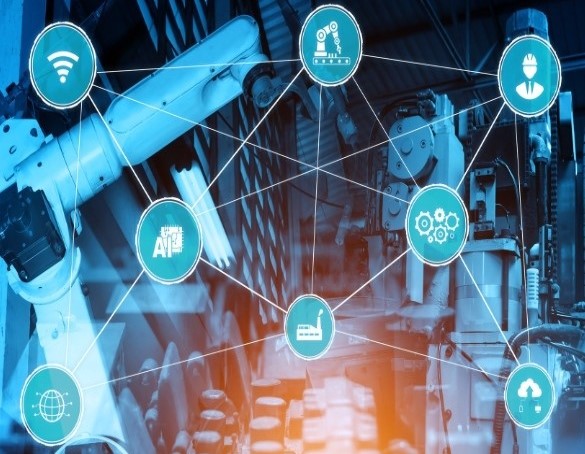
Learn how Embien's industrial automation expertise bridges vehicle electronics and factory systems — a critical capability for automotive digital twins that span production and in-field operation.

A practical example of high-reliability embedded engineering: Embien developed a Li-Ion battery monitoring system for aerospace — demonstrating the BMS simulation and hardware expertise central to automotive digital twin development.