
Electro-mechanical product design is the integrated engineering discipline that combines electronic circuit design (PCB design, component selection, signal integrity) with mechanical engineering (enclosure design, structural analysis, thermal management) to produce a complete, manufacturable physical product. Unlike software-only development, electro-mechanical product design must satisfy simultaneous electrical performance, thermal, EMC, mechanical robustness, IP rating, ergonomic, and DFM constraints — all of which influence each other.
Successful electro-mechanical product design requires hardware engineers and mechanical engineers to collaborate from the earliest concept stage, not hand off sequentially.
The concept phase defines the design envelope: target product dimensions, operating environment (temperature range, humidity, vibration, IP rating), power budget, regulatory targets (CE, FCC, UL, RoHS, REACH), and production cost goals. System architecture decisions — single PCB vs modular, custom ASIC vs COTS module, active vs passive cooling — must be made with full awareness of mechanical implications.
PCB and mechanical enclosure design must proceed in parallel, not sequentially:
Thermal analysis is a critical part of electro-mechanical product design, particularly for power electronics, processors, and radio frequency components. Methods include:
Design for manufacturability and thermal management often conflict — choosing between finned heat sinks (effective, larger), heat pipes (efficient, complex to assemble), and thermal interface materials (TIMs) requires balancing performance, cost, and assembly complexity.
Electromagnetic compatibility (EMC) design is most effective when addressed in the schematic and PCB layout phase — not retrofitted after a failed compliance test:

Pre-compliance EMC testing on prototype hardware catches issues before expensive third-party certification testing.
Design for manufacturability (DFM) review is a critical checkpoint before committing to tooling and production:
Embien Technologies delivers full electro-mechanical product design services for embedded products across automotive, industrial, medical, and defence applications. Our engineering team combines PCB schematic and layout expertise with mechanical CAD, thermal simulation, and EMC design-in skills to produce products that pass certification on the first attempt.
Our electro-mechanical product design work spans from 4-layer consumer PCBs to 16-layer high-speed PCB and mechanical enclosure design for harsh industrial environments (IP67), medical device hardware in compliance with IEC 60601-1, and automotive-grade electronics. We provide design for manufacturability reviews and support NPI through the production ramp.

Embien applies cross-domain engineering expertise to develop reliable, manufacturable products for demanding automotive, industrial, medical, and mission-critical applications.

Embien's Electro-Mechanical Product Design Services integrate PCB, mechanical, thermal, EMC, and DFM engineering for production-ready products.
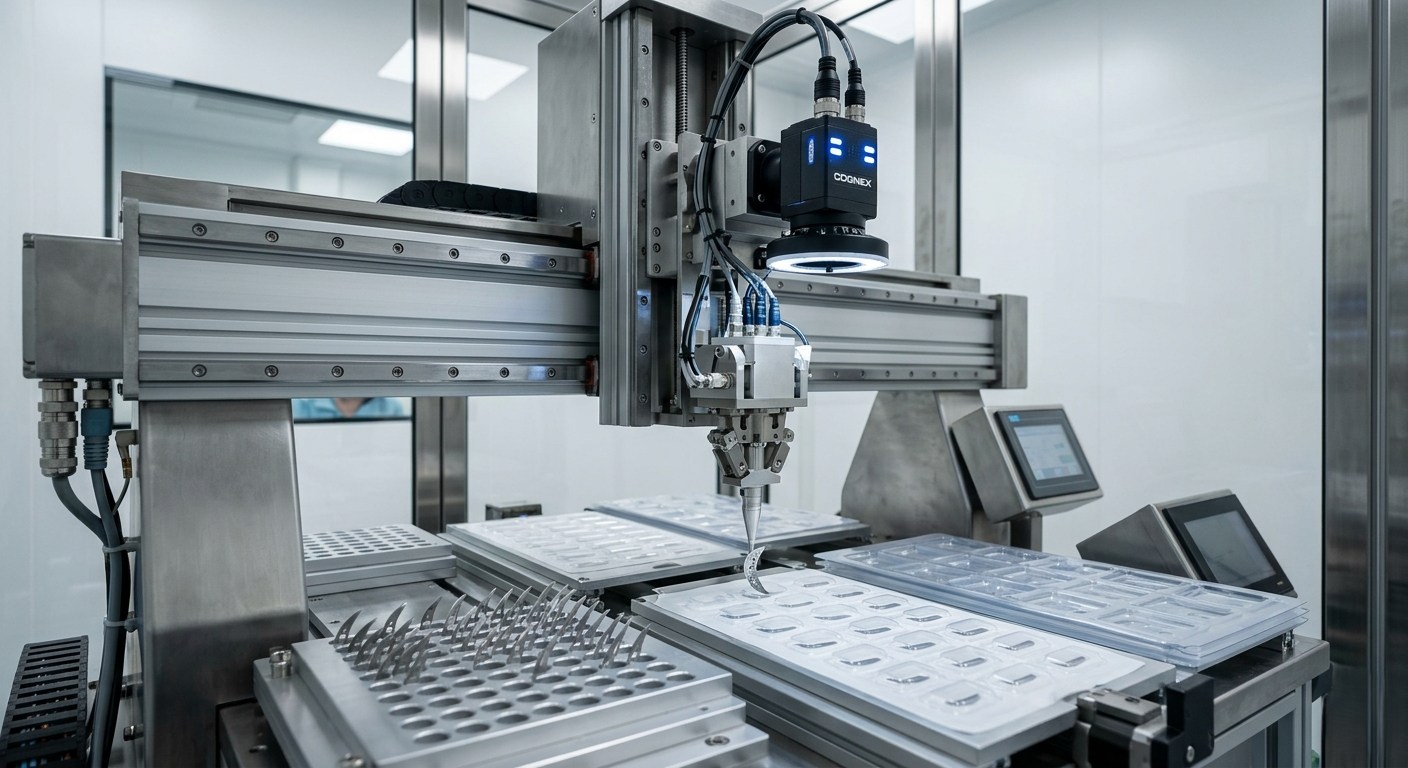
An automated vision inspection and robotic sorting solution for surgical blades, integrating machine vision, precision inspection, and automated handling.