
Yocto is the right embedded Linux build system for complex, long-lifecycle products where package flexibility, layer-based customisation, and SDK generation are critical. Buildroot is better for simpler, faster-to-build embedded Linux images where a minimal, reproducible root filesystem is the goal. Both Yocto and Buildroot generate custom embedded Linux distributions from source, but they differ significantly in architecture, flexibility, and learning curve.
An embedded Linux build system automates the process of downloading, configuring, cross-compiling, and packaging a complete Linux-based firmware image for a target embedded hardware platform — including the bootloader (U-Boot), Linux kernel, root filesystem, and all application packages. Both Yocto and Buildroot serve this purpose but with different design philosophies.
The Yocto Project (with its build engine, BitBake, and metadata framework, OpenEmbedded-Core) uses a layer-based architecture:
The Yocto Project learning curve is steep — understanding the recipe language, layer priority, variable expansion, and dependency resolution requires significant investment. But for teams that need to maintain a product image over a 5–10 year lifecycle, adding and removing packages, supporting multiple hardware variants, and generating regular security patch updates, the Yocto Project's flexibility is unmatched.
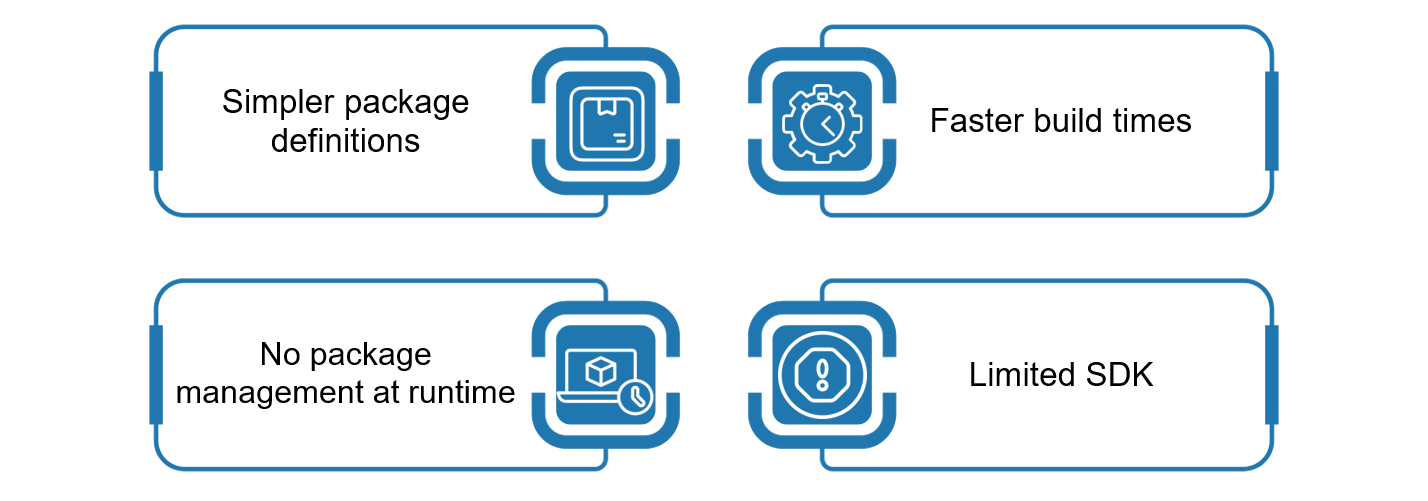
Buildroot uses a Kconfig-based menuconfig interface (familiar from the Linux kernel) and a simpler Makefile-based build description:
| Factor | Choose Yocto | Choose Buildroot |
|---|---|---|
| Product lifecycle | 5+ years, security updates needed | Short lifecycle, fixed firmware |
| Package count | Hundreds of packages | Tens of packages |
| Hardware variants | Multiple SoC variants supported | Single or few targets |
| Team experience | Dedicated embedded Linux engineers | Smaller team, simpler needs |
| SDK requirement | App team needs cross-SDK | Minimal application development |
| Build speed (first build) | 2–4 hours | 20–40 minutes |
| Community/vendor support | Large ecosystem, all major silicon vendors | Good community, most major vendors |
Embien Technologies has extensive experience with both Yocto Project layers and Buildroot across NXP i.MX6/i.MX8, Renesas RZ/G, Qualcomm, and Xilinx/AMD Zynq platforms. Our embedded Linux engineering team delivers complete BSP development: board bring-up, kernel device driver development, bootloader configuration (U-Boot), root filesystem customisation, and OTA update integration.
When clients face the Yocto vs Buildroot choice, our embedded product engineering team evaluates product lifecycle, team capacity, hardware complexity, and update requirements to recommend and implement the right embedded Linux build system for the project.

Embien's Digital Transformation Services help modernize embedded products through connected platforms, software integration, and scalable digital solutions.

Embien's Embedded OS Porting and BSP Development services enable Linux platform bring-up, kernel customization, device drivers, and hardware-specific BSP development.
A case study on developing a GigE thermal camera solution on Embedded Linux with a custom GStreamer plug-in for efficient thermal image capture and processing.