
Introduction
Teams building their first regulated medical device software often discover IEC 62304 as a documentation burden rather than what it actually is: a software development lifecycle process that, done properly, catches defects earlier and cheaper than an unstructured process ever would. ISO 13485 for medical devices provides the quality management system IEC 62304's software activities live inside, and understanding how the two standards fit together, rather than treating IEC 62304 compliance as a standalone checklist, is what separates a smooth regulatory submission from a stalled one.
In short: IEC 62304 software lifecycle for medical devices requires software safety classification before any other lifecycle decision makes sense, and getting that classification wrong early cascades into wrong decisions about testing rigor, documentation depth, and risk management scope for the rest of the program.
What IEC 62304 Covers and What It Doesn't
IEC 62304 governs the software development lifecycle process for medical device software, planning, requirements, architecture, implementation, verification, and maintenance, but it does not itself define product safety requirements or clinical performance criteria. Those come from the device's own risk management process under ISO 14971 and from applicable product-specific standards. IEC 62304 answers "how rigorously was this software developed and verified," not "is this specific clinical function safe," a distinction that matters because a common early mistake is treating IEC 62304 compliance alone as sufficient evidence of device safety when it's actually one input into a broader safety case.
Software Safety Classification (Class A/B/C) and Why It Matters Early
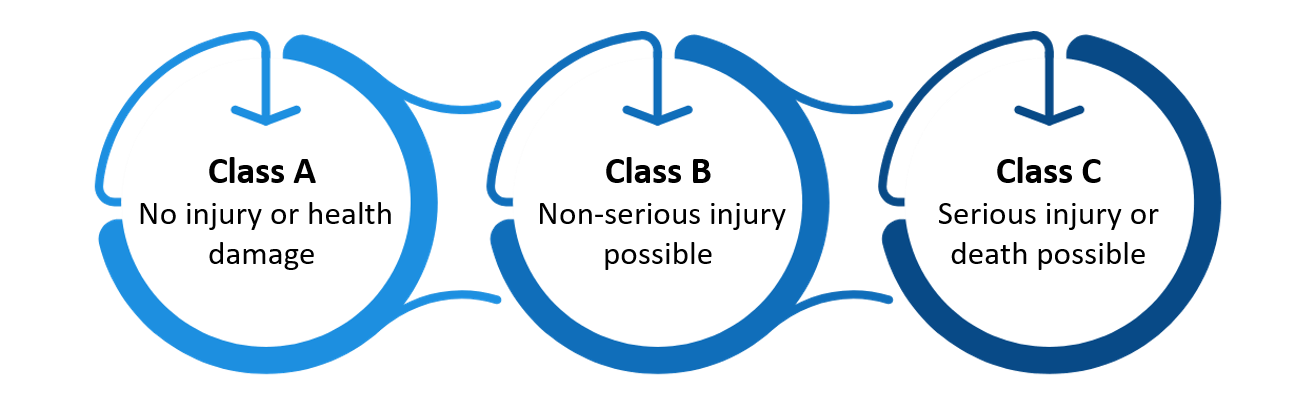
IEC 62304 defines three software safety classes based on the potential harm a software failure could contribute to: Class A (no injury or damage to health possible), Class B (non-serious injury possible), and Class C (death or serious injury possible). This classification determines nearly everything else about how rigorously the lifecycle needs to be executed, Class C software requires significantly more rigorous architecture documentation, unit-level verification, and risk control traceability than Class A. Classifying too late, or classifying without adequate rigor, is one of the most expensive early mistakes a program can make: a team that spends months developing under an assumed Class A process, only to have a regulatory reviewer or internal safety analysis reclassify the software as Class C, faces a substantial rework of verification and documentation that proper classification at the outset would have avoided entirely.
Required Lifecycle Activities and Documentation
IEC 62304's lifecycle activities, software development planning, requirements analysis, architectural design, detailed design, implementation, integration and integration testing, system testing, and release, each require documented evidence, not just completed work. A software requirement without a traceable link to a verification activity that confirms it was correctly implemented is, from an auditor's perspective, functionally equivalent to a requirement that was never verified at all. Building traceability into the development process itself, a requirements management tool that maintains the link from requirement through design through test case, rather than reconstructing a traceability matrix retroactively before a submission deadline, is the single highest-leverage practice for keeping this documentation burden manageable rather than overwhelming.
How IEC 62304 Interacts With ISO 13485 and IEC 60601
ISO 13485 for medical devices is the quality management system standard that IEC 62304's software processes have to operate within, design controls, document control, corrective and preventive action, and management review all apply to software development the same way they apply to hardware development, and a software process that exists outside the company's ISO 13485 QMS is a compliance gap regulators specifically look for. IEC 60601 compliance intersects differently: it governs the electrical, mechanical, and (in the 60601-1-8 and related collateral standards) usability safety of medical electrical equipment, and where a device's software directly controls a function 60601 regulates, alarm systems being the clearest example, IEC 62304's software risk management has to align with 60601's specific safety requirements rather than being developed as an independent workstream.
Common Compliance Gaps in First-Time Submissions
First-time submissions run into a recognizable set of gaps: incomplete traceability from requirements to verification, especially for requirements added or modified after the initial architecture was documented; risk management activities performed as a separate, parallel process rather than integrated into the software lifecycle where IEC 62304 actually expects to see them connected; and SOUP (Software of Unknown Provenance, third-party libraries and components) evaluated inconsistently or not at all, when IEC 62304 specifically requires documented justification for why each SOUP component is acceptable for its safety classification. Each of these gaps is straightforward to avoid with the right process discipline from the start, and expensive to discover during a regulatory review.
Practical Tips for Building Compliance Into the Dev Process From Day One
Programs that avoid the common gaps generally share a few practices: classifying software safety class before writing the first line of code, not after the architecture is already set; choosing a requirements management approach that maintains live traceability rather than a periodically-updated spreadsheet; evaluating and documenting SOUP components as they're selected, not retroactively before submission; and integrating risk management reviews into the same design review cadence as the rest of the software lifecycle, rather than scheduling them as separate, disconnected meetings. None of these add significant overhead when built in from the start; each becomes expensive when retrofitted late.
Why Use Embien for ISO 13485 Certification Support?
Why use Embien for ISO 13485 certification support? Our engineering process follows ISO 13485-compliant quality management practices across design controls, document control, and change management, integrated with IEC 62304-aligned software development for every medical device software program we take on. We build the requirements traceability, risk management integration, and SOUP evaluation discipline described above into the development process from day one, so the documentation a submission requires already exists as a byproduct of how the software was actually built, not as a separate reconstruction exercise before a filing deadline.
Embien's Capabilities
Embien delivers ISO 13485 certified medical device engineering practices across embedded software and firmware development, with a compliance-by-design approach to IEC 62304, IEC 60601, and ISO 14971 risk management. Our teams build traceability, SOUP evaluation, and safety classification into the software lifecycle from the first architecture decision, not as documentation assembled after development is complete.
To discuss IEC 62304 or ISO 13485 process fit for a medical device software program, reach out to Embien's engineering team.