
Introduction
The Matter standard promised to end years of smart-home fragmentation, one certification, one protocol, devices from any participating manufacturer working together regardless of brand. Several years into Matter's rollout, it's worth taking an honest look at where that promise actually stands for engineering teams building smart home IoT solutions today, because the real picture is more nuanced than either the standard's original marketing or its skeptics' dismissals suggested it would be.
In short: Matter and Thread together have made real, measurable progress on smart-home interoperability, particularly for straightforward device categories like lighting and simple sensors, but meaningful fragmentation persists for more complex device categories and around ecosystem-specific features that Matter's common baseline doesn't cover, meaning engineering teams building Matter-certified products in 2026 still need to plan for real integration testing and platform-specific edge cases rather than assuming certification alone guarantees seamless interoperability.
What Matter and Thread Actually Standardize
Matter is an application-layer standard defining a common data model and command set for smart-home device categories, lighting, locks, sensors, thermostats, and more, so that a Matter-certified device from any manufacturer can be controlled by any Matter-compatible hub or app using the same standardized commands, rather than requiring manufacturer-specific integration work for every device-and-platform combination. Thread is a separate but complementary standard operating at the networking layer, a low-power, IPv6-based mesh networking protocol that Matter devices commonly run over, providing the reliable, self-healing local network many Matter devices depend on, particularly battery-powered sensors and other devices where Wi-Fi's power consumption would be impractical. Understanding that Matter and Thread solve different layers of the interoperability problem, application-level command standardization versus network-level connectivity, is essential to understanding both what's actually solved and what still isn't.
Where Interoperability Is Genuinely Working Today
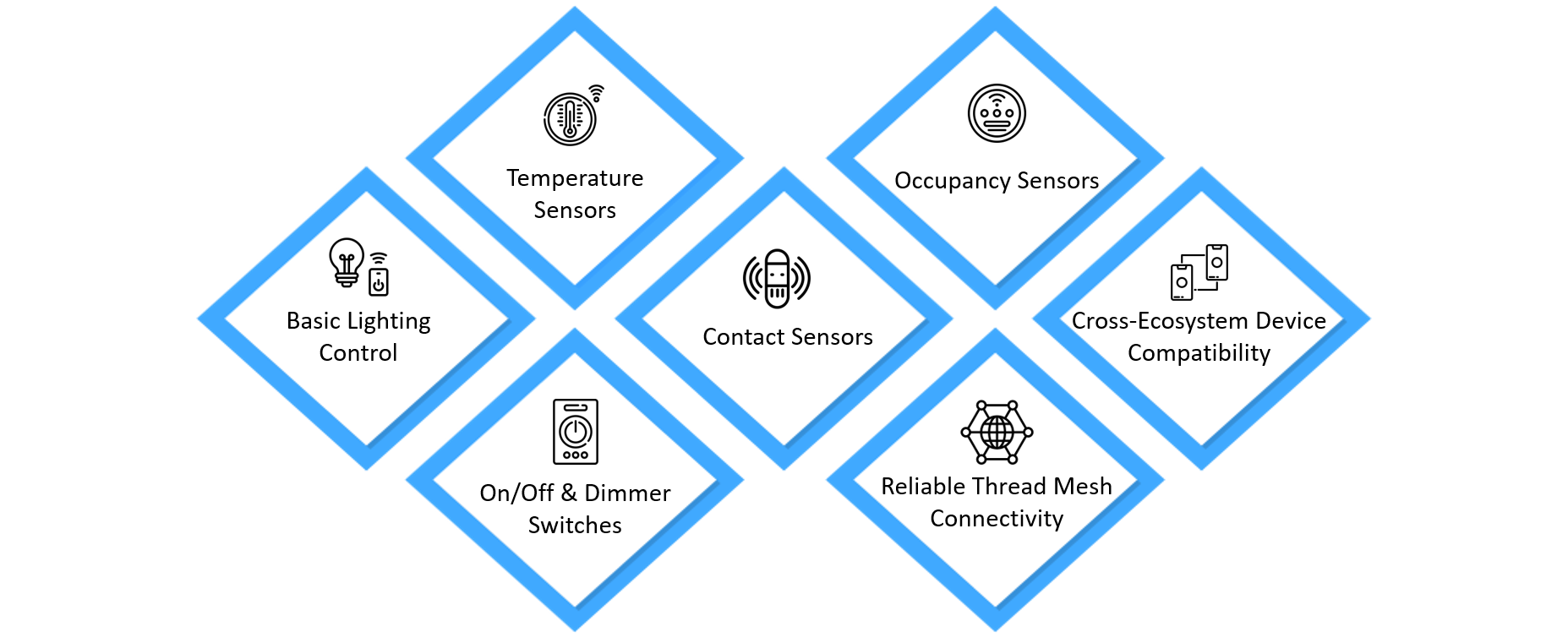
Matter's real success is clearest in the device categories it standardized earliest and most completely: basic lighting control, simple on/off and dimmer switches, and straightforward sensors, temperature, contact, occupancy, genuinely work across different ecosystems and hub brands with minimal integration friction today, delivering close to the original cross-brand promise for these device types. Thread's mesh networking has also matured into a genuinely reliable connectivity layer for the battery-powered sensor category specifically, with self-healing mesh behavior and power efficiency that hold up well in real home deployments rather than only in controlled lab demonstrations, giving engineering teams a networking foundation they can build on with reasonable confidence for these simpler device classes.
Where Fragmentation Persists Despite the Standard
More complex device categories, robot vacuums, complex multi-zone HVAC systems, and cameras with advanced features, still show real fragmentation, because Matter's standardized command set for these categories often covers only a common baseline of functionality, leaving manufacturer-specific advanced features implemented outside the standard through proprietary extensions or a manufacturer's own app, which reintroduces exactly the ecosystem lock-in Matter was meant to eliminate for anyone wanting to use those advanced features. Ecosystem-specific voice assistant integration and automation-platform-specific scene and routine features similarly remain largely outside Matter's scope, meaning a genuinely unified smart-home experience across ecosystems, beyond basic device control, still isn't fully delivered by Matter certification alone.
How to Ensure Interoperability Between Different IoT Devices and Platforms in Practice
How to ensure interoperability between different IoT devices and platforms in practice, for a team building a Matter-certified product today, means treating formal certification as a necessary baseline rather than a complete guarantee: real-world interoperability testing against the major hub and app ecosystems a product is likely to be used with, careful design of any advanced, manufacturer-specific functionality so it degrades gracefully to Matter's standard baseline rather than failing outright on a platform that doesn't support the proprietary extension, and active monitoring of how each major ecosystem's Matter implementation evolves, since implementation quality and completeness still vary meaningfully across different hub and platform vendors even when all claim standard compliance.
Engineering Implications of Building Matter-Certified Products
Building a genuinely well-behaved Matter-certified product involves real engineering work beyond implementing the standard's required command set: a commissioning flow that works reliably across different Thread border routers and Wi-Fi access point configurations found in real homes, firmware update infrastructure that can evolve with the Matter specification as it continues to mature, and thoughtful handling of the gap between Matter's standardized baseline and any differentiated features the product needs, so those features add value without breaking the product's basic Matter interoperability for users on a different ecosystem. Teams that treat Matter certification as the finish line rather than a baseline consistently discover real-world interoperability gaps only after product launch, when they're far more expensive to fix.
Thread's Role as the Underlying Mesh Networking Layer
Thread's specific value as the networking layer underneath many Matter devices deserves separate attention from Matter's application-layer standardization, because Thread's mesh topology and IPv6-based addressing solve a genuinely different problem: reliable, low-power connectivity for a growing population of battery-powered smart-home sensors that Wi-Fi's power draw makes impractical for. A Thread network's self-healing mesh behavior, where devices can route around a failed or out-of-range node automatically, gives smart-home deployments a resilience that a traditional star-topology Wi-Fi network doesn't provide as naturally, particularly as the number of connected devices in a typical home continues to grow well beyond what early smart-home network designs anticipated.
Smart Home IoT Device Integration Expertise: What It Actually Requires in 2026
This kind of expertise in 2026 means genuine, current familiarity with Matter's evolving specification, Thread network commissioning and troubleshooting across real-world router and access-point configurations, and the practical, accumulated knowledge of where different ecosystem implementations diverge from strict specification compliance in ways that only show up through real interoperability testing rather than reading the standard's documentation alone. This expertise gap is exactly where many product teams building their first Matter-certified device underestimate the integration testing effort required before a genuinely reliable, cross-ecosystem product experience is achieved.
Smart Home Technology Integrators: Bridging the Standard and Real-World Deployment
Smart home technology integrators play an important role in bridging the gap between Matter's specification and what actually works reliably in a real home deployment, accumulating practical knowledge across the growing number of hub and ecosystem combinations that certification testing alone doesn't fully surface. A product team building its own Matter-certified device benefits from this same kind of integrator-level, cross-ecosystem testing discipline internally, verifying real-world behavior against the major platforms a product will actually be used with rather than relying on certification compliance as a proxy for guaranteed interoperability.
Matter and Thread Interoperability for Smart Home Devices 2026: What to Watch For as Adoption Continues
This landscape is very much still evolving rather than settled, and product teams should watch for continued specification updates expanding standardized coverage into more complex device categories, growing but still uneven implementation quality across different ecosystem vendors, and gradual narrowing, though not yet elimination, of the gap between Matter's common baseline and the differentiated, ecosystem-specific features that still drive real fragmentation today. Teams building smart-home products now should architect for this continued evolution, keeping firmware update infrastructure flexible enough to track the specification's ongoing maturation, rather than assuming today's interoperability landscape is its final, settled state.
Embien's Capabilities
Embien brings connected-home embedded engineering experience spanning Matter and Thread protocol integration, cross-ecosystem interoperability testing, and firmware architecture for smart-home devices needing to stay current with an actively evolving standard. Our engineering process treats certification as a starting baseline and validates real-world behavior against the major hub and ecosystem platforms a product will actually encounter in the field.
To discuss smart home IoT solutions or Matter-certified product development for a connected home device, reach out to Embien's engineering team. Whatever a product's specific device category, well-engineered smart home IoT solutions in 2026 still mean treating certification as a floor, not a finished interoperability guarantee.