
Alarm flooding, an operator receiving far more alarms per minute than a human being can meaningfully read, triage, and act on, particularly during the exact upset condition that generated them, is one of the most consistently documented contributing factors in serious industrial incident investigations, including some of the most widely studied process-safety disasters on record. The pattern is almost always the same: a single upstream fault cascades into dozens or hundreds of downstream alarms within seconds, most of them consequences of the same root cause rather than independent problems, and an HMI that presents them all with equal visual priority leaves the operator no practical way to identify which one actually needs an immediate response. Isa-18.2 alarm management for industrial hmi design exists specifically because this is a design failure, not an operations failure, and it's preventable with the right alarm system engineering discipline applied before commissioning rather than after an incident.
ISA-18.2 defines alarm management as a full lifecycle rather than a one-time configuration task: identification of what conditions genuinely warrant an alarm in the first place, rationalization against documented criteria for priority and necessity, HMI design and implementation that presents rationalized alarms clearly, ongoing monitoring of real alarm rates and performance against ISA-18.2's own benchmarks, and periodic audit and management-of-change discipline so the system doesn't silently drift back into an over-alarmed state as the plant and its instrumentation evolve over time. Isa-18.2 alarm management for industrial hmi design treats every stage of that lifecycle as connected: an alarm that was never properly rationalized has no reliable basis for the priority it displays on an HMI, no matter how well the screen itself is laid out.
An alarm philosophy document is ISA-18.2's foundational artifact, a written, plant-specific policy defining what qualifies as an alarm at all, how priorities are assigned and to what criteria, target alarm rates per operator per shift, and the process for adding, changing, or retiring an alarm going forward. Despite being the standard's starting point, a genuine alarm philosophy document is the exception rather than the rule across real plants, most alarm systems in the field grew organically over years of individual engineering changes with no single governing document ever written, which is exactly how alarm counts silently balloon well past what ISA-18.2 considers a manageable rate without any single decision ever being to blame.
Alarm flooding and alarm rationalization for industrial control systems doesn't require a full HMI rebuild to meaningfully improve, which matters because a full rebuild is rarely funded on its own. A practical rationalization pass works through existing configured alarms against documented criteria, genuinely needs an operator response, is correctly prioritized relative to other alarms, isn't a duplicate or a consequence of another alarm already firing, and suppresses, removes, or reclassifies the ones that fail that test. Alarm flooding and alarm rationalization for industrial control systems projects consistently find that a substantial share, often a large majority, of configured alarms in an unrationalized system either never fire usefully or duplicate another alarm's information, meaning meaningful improvement is achievable through rationalization and re-prioritization even where the underlying HMI screens themselves stay largely unchanged.
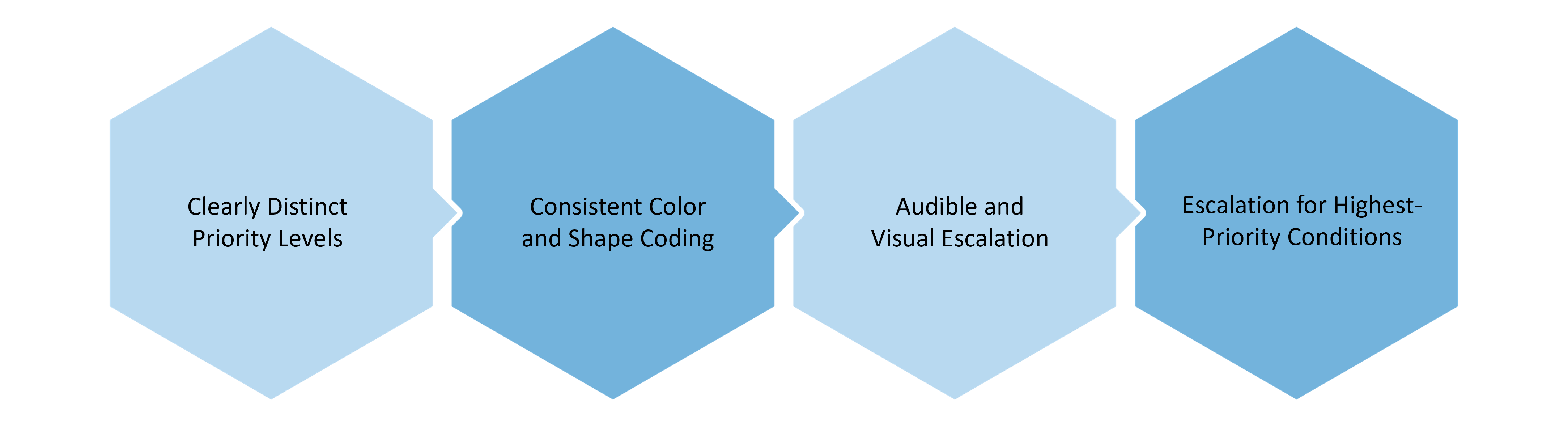
Getting priority classification right in a rationalization exercise is only half the job; the HMI then has to actually communicate that priority to a stressed operator in the middle of a fast-moving event, which is a human-factors design problem as much as a control-system one. Well-designed alarm HMIs use a small number of clearly distinct priority levels, rather than a dozen fine gradations no operator can reliably distinguish under pressure, consistent color and shape coding rather than color alone, since color perception and monitor calibration vary, and audible and visual escalation reserved genuinely for the highest-priority conditions so operators don't habituate to constant alerting and start tuning it out entirely, the exact habituation effect that makes an over-alarmed system dangerous even when every individual alarm is technically correct.
Alarm management and functional safety systems, safety instrumented systems and the interlocks that trip a process to a safe state automatically, are related but distinct layers, and conflating them is a common design mistake. An alarm is meant to prompt a timely human response; a safety instrumented function acts automatically, independent of whether an operator responds to the alarm at all, specifically because human response time and correctness can't be relied upon as the sole protection layer for the most severe consequences. A well-designed alarm system supports the safety layer, by keeping an operator correctly informed and unsurprised as conditions approach a safety trip point, rather than substituting for it, and ISA-18.2's own guidance is explicit that alarm rationalization is not a substitute for a proper functional safety and layer-of-protection analysis.
Designing hmis for actionable alarm management means every alarm that reaches an operator's screen has already passed the rationalization test described above, and is then presented with a priority, a clear description of the condition, and, wherever practical, a documented recommended operator response rather than a bare tag name and setpoint value the operator has to interpret from memory under time pressure. Designing HMIs for actionable alarm management this way is what actually delivers on the promise of alarm management as a discipline, converting a real plant condition into a response an operator can execute confidently and quickly rather than a screen full of undifferentiated noise.
Alarm philosophy and hmi design for operator response have to be developed together rather than sequentially, because a beautifully written alarm philosophy document delivers little value if the HMI screens built afterward don't actually implement its priority and presentation rules consistently, and conversely a well-designed HMI has nothing sound to display if the underlying alarm rationalization and philosophy work was never done. Treating these as one integrated deliverable, rather than a documentation exercise followed by an unrelated screen-design exercise, is what keeps an ISA-18.2 program from stalling out after the philosophy document is written but before it actually changes what an operator sees.
Rugged hmi panel firmware development matters directly to alarm management reliability, because an alarm system is only as dependable as the panel hardware and firmware displaying it, panel firmware that can freeze, lag, or lose audible-alert state under load undermines even a perfectly rationalized alarm philosophy. Rugged hmi panel firmware development for plant-floor deployment has to guarantee that alarm banners, priority coding, and audible escalation remain responsive and correctly rendered even on constrained embedded hardware operating in a hot, vibration-prone, electrically noisy plant environment, since a panel that can't reliably render an alarm state is a safety-relevant failure, not just a cosmetic one.
Embien Technologies designs industrial HMI software with ISA-18.2-aligned alarm presentation, priority coding, and rationalization support built into the screen architecture, backed by rugged embedded panel firmware engineering for reliable operation on plant-floor hardware. Our industrial HMI design services cover alarm-critical HMI design alongside the broader display and panel firmware work behind it.
To discuss isa-18.2 alarm management for industrial hmi design for a new or existing HMI deployment, reach out to Embien's engineering team.

Embien's product engineering services support the development of industrial embedded products, covering HMI software, embedded hardware and firmware, display integration, system engineering, and validation for reliable plant-floor applications.

Embien supports industrial automation through HMI and SCADA development, embedded control systems, industrial communication, and operator interface engineering, helping create clear process visualizations, actionable alarm displays, and reliable monitoring systems.
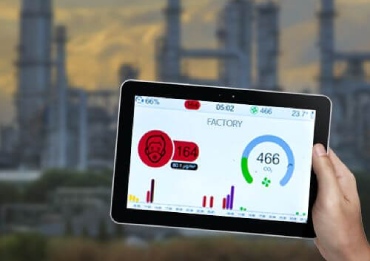
A case study on developing an industrial environmental monitoring system, highlighting embedded system integration, sensor data acquisition, and real-time monitoring capabilities relevant to industrial process visibility and operator awareness.