
Introduction
Sustainability in embedded product design has moved well past the point of being a marketing claim layered onto a data sheet after the fact. Regulatory pressure, from energy-efficiency standards to right-to-repair legislation, and genuine buyer expectation, from enterprise procurement scorecards to consumer purchase decisions, are both pushing low power design and broader environmental considerations into the same category as cost, size, and reliability: a real constraint that has to be designed for from the earliest architecture decisions, not retrofitted at the end.
In short: the sustainability-conscious market now expects genuine power-efficiency engineering, repairable and serviceable product design, and manufacturing and material choices that reduce a product's environmental footprint, and the products that hold up best under scrutiny are the ones where these choices are backed by real engineering evidence rather than marketing language, since a sustainability claim without measurable data behind it increasingly invites more skepticism than credit.
What's Driving Sustainability From Nice-to-Have to Design Requirement
Several forces are converging to make sustainability a genuine design requirement rather than an optional differentiator. Regulatory pressure is real and growing, energy-efficiency standards for connected devices, extended producer responsibility rules that make manufacturers accountable for a product's end-of-life environmental impact, and right-to-repair legislation in multiple jurisdictions that mandates repairability rather than treating it as a nice-to-have feature. Buyer expectation has shifted alongside regulation, enterprise procurement processes increasingly score environmental impact alongside price and performance, and consumer purchase decisions, particularly among younger buyers, weight a product's sustainability credentials more heavily than they once did. Together, these pressures mean a product designed without sustainability in mind is increasingly at a genuine competitive disadvantage, not just an ethical one.
Power-Efficiency Design Choices With the Biggest Real Impact
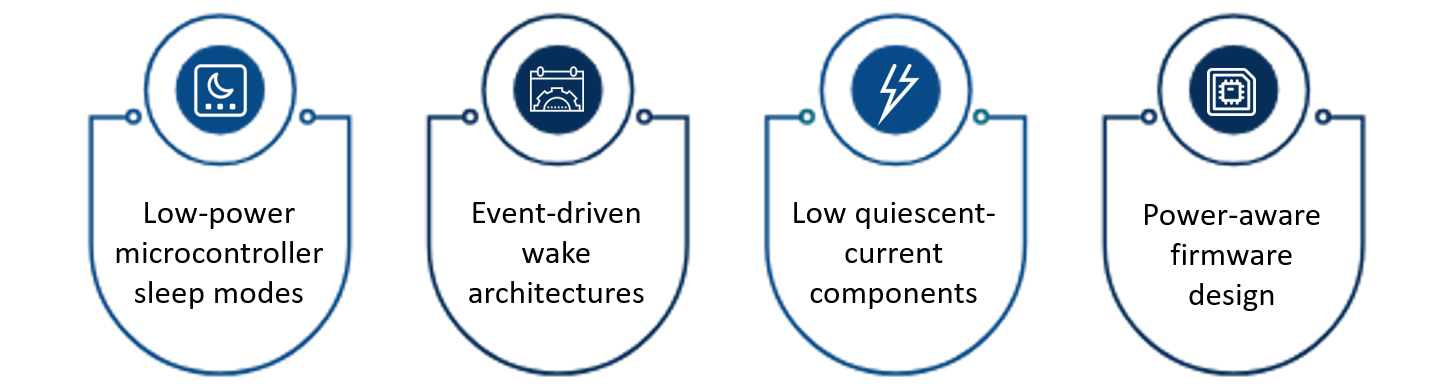
Low power design choices deliver the most measurable sustainability impact of any single design decision, since a product's energy consumption over its operating life is frequently its single largest environmental footprint contributor, larger than manufacturing or end-of-life disposal for a product with a long service life. Aggressive use of low-power microcontroller sleep modes and event-driven wake architectures rather than continuous polling, careful component selection favoring genuinely low quiescent-current parts over marginally cheaper high-consumption alternatives, and power-aware firmware architecture that minimizes active processing time and radio transmission duration are the choices that move the needle most, far more than incremental efficiency gains chased after the core architecture is already locked in.
Low-Power Design for Portable Medical Products: Where the Stakes Are Highest
Low-power design for portable medical products carries stakes beyond general sustainability concern, battery life directly determines how long a wearable or portable medical device can operate between charges or battery replacements, which in turn affects patient compliance, device usability, and in some cases patient safety if a device fails during a critical monitoring period. This makes portable medical devices a category where power-efficiency engineering isn't a sustainability nice-to-have layered on top of the core design, it's a core functional requirement that happens to also deliver the same environmental benefit that low-power design delivers everywhere else, and the engineering discipline required, careful sleep-mode architecture, efficient sensor sampling strategies, low-power wireless protocol selection, is the same discipline that pays sustainability dividends in any product category.
Repairability and End-of-Life Design Considerations
A product's environmental footprint doesn't end at first sale, and design decisions made early have an outsized effect on what happens to a product at end-of-life. Modular construction that allows a failed component or battery to be replaced rather than requiring the whole device to be discarded, avoiding permanent adhesives and proprietary fasteners that make disassembly difficult or destructive, and designing for material separation so recyclable components can actually be recovered at end-of-life rather than ending up combined in a way that makes recycling impractical, all meaningfully extend a product's useful life and reduce its ultimate waste footprint. These choices increasingly intersect directly with right-to-repair legislation that mandates exactly this kind of repairable, serviceable design in a growing number of jurisdictions.
Material and Manufacturing Choices That Affect a Product's Footprint
Beyond power consumption and repairability, material selection and manufacturing process both carry real environmental weight. Choosing recyclable or lower-embodied-carbon materials where performance requirements allow, minimizing the variety of plastics and finishes used in an enclosure to simplify eventual recycling, and evaluating manufacturing process energy intensity and waste generation alongside unit cost during process selection are all levers a product team controls directly. None of these choices are free, they frequently involve real cost or performance tradeoffs, but treating them as evaluated tradeoffs rather than ignored variables is itself the meaningful shift a sustainability-conscious design process requires.
Where Sustainability Claims Need Real Engineering Evidence Behind Them
A growing gap exists between products that make sustainability claims and products that can substantiate them with actual engineering data, measured power consumption figures under realistic use profiles, a documented bill of materials showing recyclable content percentages, verified repairability scoring against a recognized methodology, and increasingly, buyers, regulators, and procurement processes are learning to tell the difference. Energy-efficient embedded product design for sustainability that can point to real measured data, rather than a general claim of efficiency, is both more defensible under regulatory scrutiny and more persuasive to a sophisticated buyer than marketing language alone, making the underlying engineering rigor the actual sustainability differentiator rather than the claim itself.
Green Electronics Design for Sustainability-Conscious Markets as an Integrated Discipline
Green electronics design for sustainability-conscious markets works best when power efficiency, repairability, and material selection are treated as one integrated design discipline evaluated together from the earliest architecture decisions, rather than three separate initiatives pursued independently and potentially working against each other, a repairable modular design that increases power consumption through additional interconnects, for instance, needs to be weighed as a genuine tradeoff rather than optimized for in isolation. Products that get this integration right consistently outperform, on both environmental impact and market reception, products where sustainability was pursued as a checklist of disconnected initiatives added late in development.
How This Intersects With the Right to Repair Trend
Designing repairable and sustainable consumer electronics sits at the direct intersection of the sustainability pressures covered here and the right-to-repair legislative movement gaining ground across multiple markets, a topic significant enough in its own right to warrant its own dedicated treatment for consumer electronics specifically. The design principles are shared, modularity, serviceability, avoiding artificial barriers to independent repair, but the regulatory and market dynamics driving each differ enough that a product team should understand both as related but distinct pressures shaping the same underlying design decisions.
Embien's Capabilities
Embien brings low-power embedded design experience across portable medical, industrial, and consumer products, including sleep-mode architecture, power-aware firmware design, and component selection for battery-powered and energy-constrained devices. Our engineering process evaluates power efficiency, repairability, and material choices together as integrated design inputs rather than as separate, late-stage sustainability initiatives.
To discuss low power design or sustainability-driven embedded product architecture, reach out to Embien's engineering team.