
Physical AI is the integration of artificial intelligence into physical objects and systems — enabling machines, robots, vehicles, medical devices, and industrial equipment to perceive, reason, and act in the real world autonomously. Unlike cloud AI, which processes data remotely, Physical AI runs inference directly on embedded hardware, making intelligent decisions at the point of action with low latency and without internet dependency.
The term 'Physical AI' was popularised by NVIDIA CEO Jensen Huang at CES 2025, but the concept — embedding machine intelligence into hardware that interacts with the physical world — has been the core of embedded AI engineering for over a decade.
Traditional AI in software systems operates on general-purpose servers or cloud infrastructure. Physical AI must operate on resource-constrained hardware in real-time, often with stringent power, size, and reliability constraints.
Physical AI in vehicles runs computer vision on camera feeds to detect pedestrians, read lane markings, and track objects. AI in physical systems like NVIDIA Orin-powered domain controllers processes sensor fusion from cameras, radar, and LiDAR to make real-time driving decisions. Physical AI here must meet ISO 26262 functional safety requirements.
Physical AI on industrial edge gateways analyses vibration and acoustic signatures from machinery to predict bearing failures before they occur. Vision-based Physical AI systems inspect PCBs and machined parts at production line speeds no human could match, with defect detection models running on embedded NPUs.
Physical AI in wearable devices performs real-time ECG analysis, SpO₂ measurement, and fall detection without cloud connectivity — crucial for continuous patient monitoring in remote or ambulatory settings. AI in physical systems like surgical robots provides haptic feedback and motion scaling guided by real-time AI decision-making.
Physical AI in smart cameras detects faces and objects locally, triggering alerts without sending video to the cloud. Always-on voice wake-word detection in smart speakers uses sub-milliwatt Physical AI running on dedicated audio DSPs. Edge Computing Services enable Physical AI systems to process data locally, delivering real-time intelligence, low-latency decisions, and secure on-device operation.
Building Physical AI products requires expertise across a unique hardware-software stack:
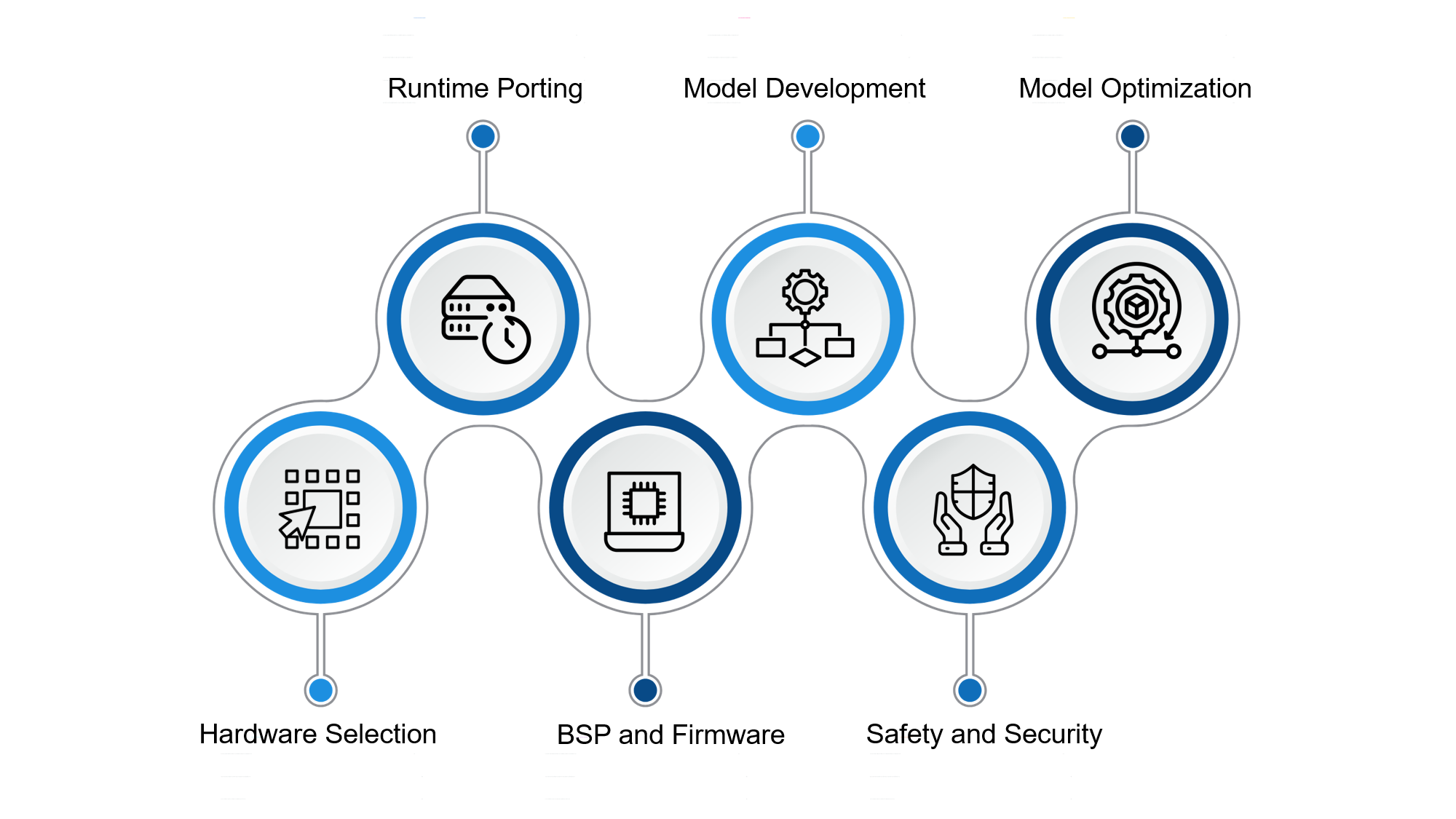
Embien Technologies is a full-lifecycle embedded product engineering company specialising in Physical AI development. Our team combines deep embedded systems expertise — hardware design, FPGA, BSP, RTOS firmware — with AI model optimization and deployment experience on NVIDIA Jetson, NXP eIQ, and ARM Cortex-M platforms.
We have delivered Physical AI solutions across automotive (ADAS, instrument clusters), industrial (predictive maintenance, machine vision), and medical (wearable diagnostics, remote patient monitoring) sectors. As an NXP Independent Design House (IDH) and Renesas partner, Embien accelerates Physical AI product development from silicon to application.
Embodied AI and Physical AI are terms that describe the same engineering challenge: intelligence that must act in the physical world. Whether you are designing a new AI-enabled product from scratch or porting an existing AI model to an embedded target, Embien's engineers can help with platform selection, model optimisation, hardware bring-up, and production readiness.

Product Engineering Services help bring Physical AI products from concept to production through integrated hardware, embedded software, AI deployment, and system validation.

Embien develops edge AI and embedded ML solutions on NVIDIA Jetson, NXP eIQ, and TinyML platforms for real-time inference.
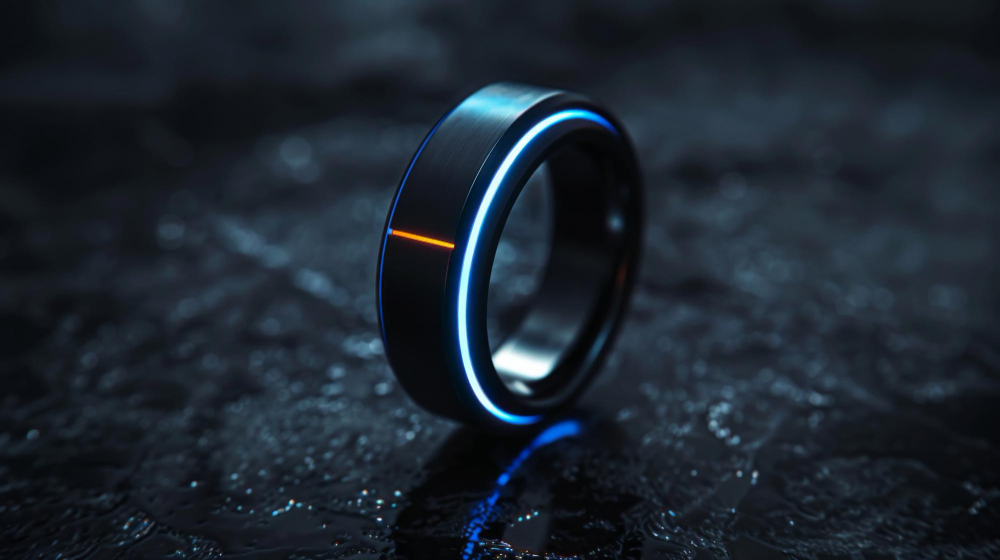
A case study on developing a smart ring with PPG-based heart-rate monitoring and wireless charging, integrating compact hardware and low-power embedded technology for wearable applications.