
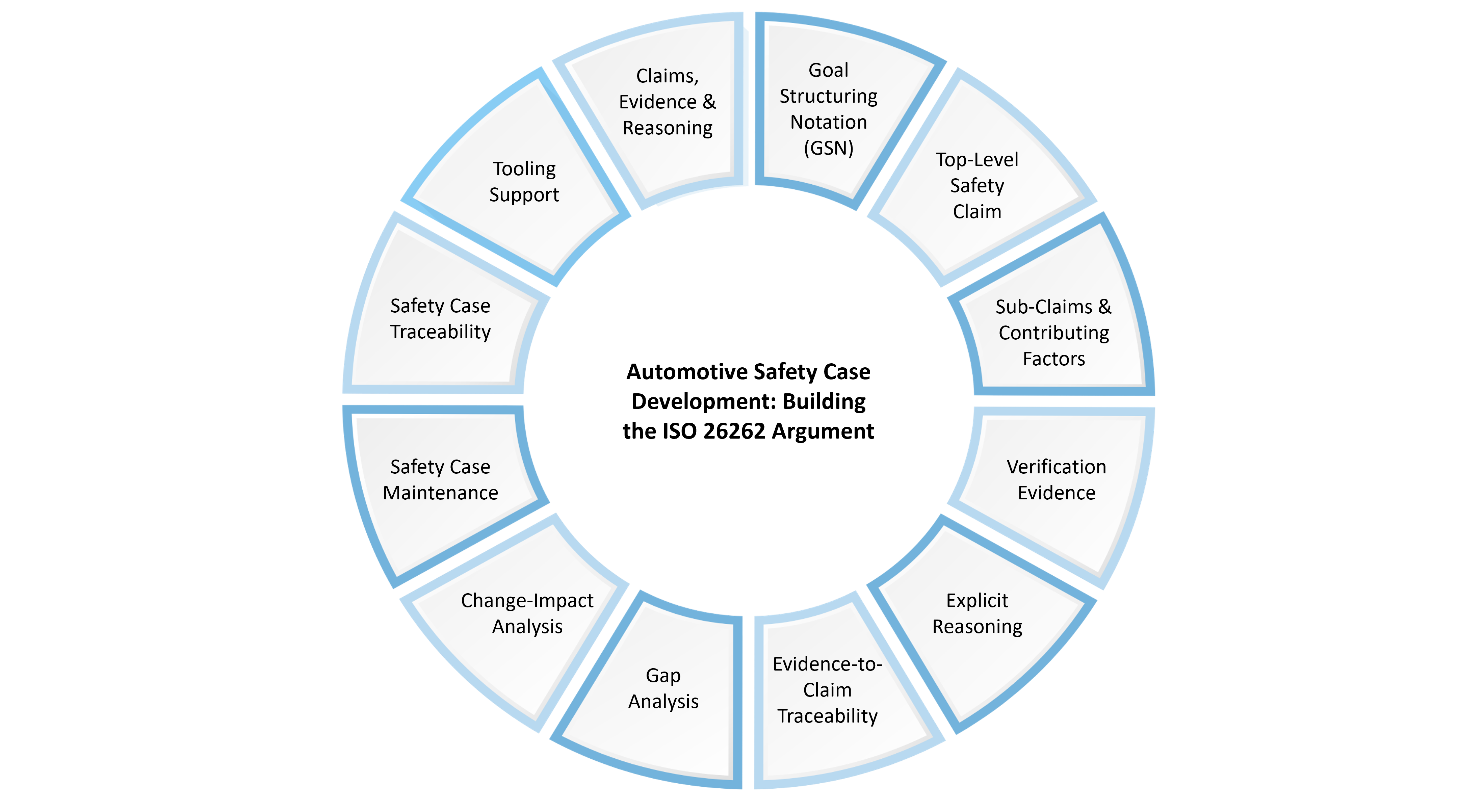
Our ISO 26262 functional safety explainer covers the standard and the work products it requires: hazard analyses, safety requirements, verification reports, and the rest of the documentation set. Automotive safety case development: building the ISO 26262 argument is the practitioner-depth follow-up on a step that comes after all of those work products exist: assembling them into an actual, coherent argument that the system is acceptably safe, which is a different and harder task than producing the individual documents an ISO 26262 checklist calls for.
Why isn't a pile of compliant work products automatically a safety case? Because compliance with a work-product checklist and a genuine safety argument answer different questions. A team can produce a technically compliant hazard analysis, a complete set of safety requirements, and passing verification reports for every one of them, and still not have assembled those pieces into a demonstration that the system, as built, is actually safe for its intended use. Automotive safety case development: building the ISO 26262 argument exists precisely because a pile of individually compliant documents doesn't automatically connect into a coherent chain of reasoning; that connective reasoning has to be built deliberately, and an assessor evaluates the argument, not just the checklist.
The structure of a safety argument: claims evidence and reasoning gives automotive safety case development its actual shape, often expressed using a structured notation like Goal Structuring Notation (GSN). A top-level claim states what's being argued, that a specific hazard is adequately mitigated, decomposed into sub-claims addressing each contributing factor, each sub-claim ultimately grounded in evidence, a test report, an analysis result, a verification record, connected by explicit reasoning that explains why that evidence actually supports the claim above it. The structure of a safety argument: claims evidence and reasoning is what an assessor actually reads when reviewing a safety case; the underlying work products only matter as the evidence layer feeding that argument structure.
The gap assessors find most often in automotive safety case development: building the ISO 26262 argument isn't missing evidence, it's evidence that doesn't actually support the specific claim it's cited under. A verification report might genuinely show a requirement was tested and passed, without the argument ever explaining why passing that specific test demonstrates the hazard the higher-level claim is about is actually mitigated. Other common gaps include reasoning that was true at one design baseline but was never revisited after a later design change, and claims that are technically supported but stated too broadly for the evidence underneath them to actually cover.
Maintaining a safety case through a vehicle program's changes is where a safety case built once at a design freeze tends to quietly go stale. Every subsequent design change, a supplier component revision, a software update, a late-stage requirement change, potentially invalidates a claim or a piece of evidence somewhere in the argument structure, and maintaining a safety case through a vehicle program's changes means having a defined impact-analysis process that traces a proposed change back to the specific claims and evidence it might affect, rather than re-reviewing the entire argument from scratch on every change or, worse, not reviewing it at all. A safety case that isn't actively maintained through a program's changes is effectively describing a system that no longer exists by the time of vehicle launch.
Tooling support for safety case construction and traceability is what makes maintaining that argument through ongoing change practical at real program scale, where a safety case can involve hundreds of claims and thousands of linked evidence artifacts. Requirements and safety-case management tools that maintain explicit, queryable links between claims, requirements, design elements, and verification evidence let a team run exactly the impact analysis the previous section describes, finding every claim a given change might touch, rather than relying on institutional memory or a manually-maintained spreadsheet that inevitably drifts out of sync with the actual argument. Tooling support for safety case construction and traceability is a genuine differentiator between programs that keep their safety case current and programs that reconstruct one under deadline pressure before every assessment.
A sound safety argument depends on the process discipline ASPICE assesses, our blog post ASPICE Compliance Explained covers why automotive software suppliers can't treat that process maturity as optional, because a safety case built on evidence from an undisciplined development process is a weaker argument regardless of how well the argument itself is structured. And the safety case is, in practice, exactly what an assessor evaluates during a functional safety audit; our sibling article on automotive functional safety audits covers what an assessor is really judging this safety case against when that review happens.
Embien Technologies supports automotive safety case development: building the ISO 26262 argument for OEM and Tier 1 programs, including GSN-based safety argument structuring, gap analysis between documented evidence and stated claims, change-impact traceability, and tooling recommendations for safety case construction and traceability. To discuss building or maintaining a safety case for an upcoming vehicle program, reach out to Embien's functional safety engineering team.

Explore Embien's expertise across Automotive, Medical Devices, Industrial Automation, Consumer Electronics, Semiconductor, and other embedded technology domains.

Embien's Product Regulatory Compliance Services support testing, certification, documentation, and compliance requirements for safety-critical and regulated embedded products.
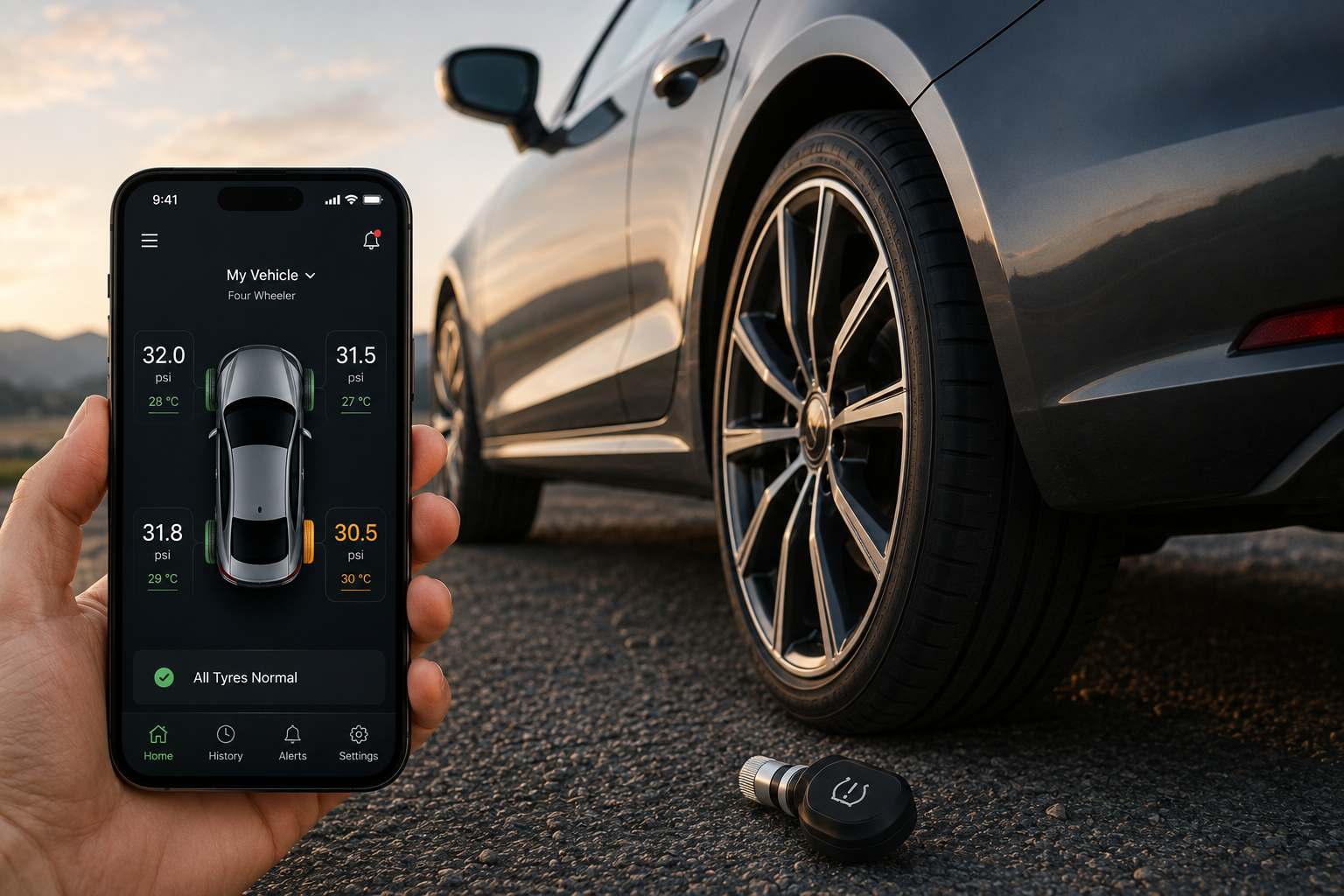
A case study on developing a TPMS monitor application for tyre pressure monitoring, enabling vehicle data monitoring and clear presentation of tyre status information.