
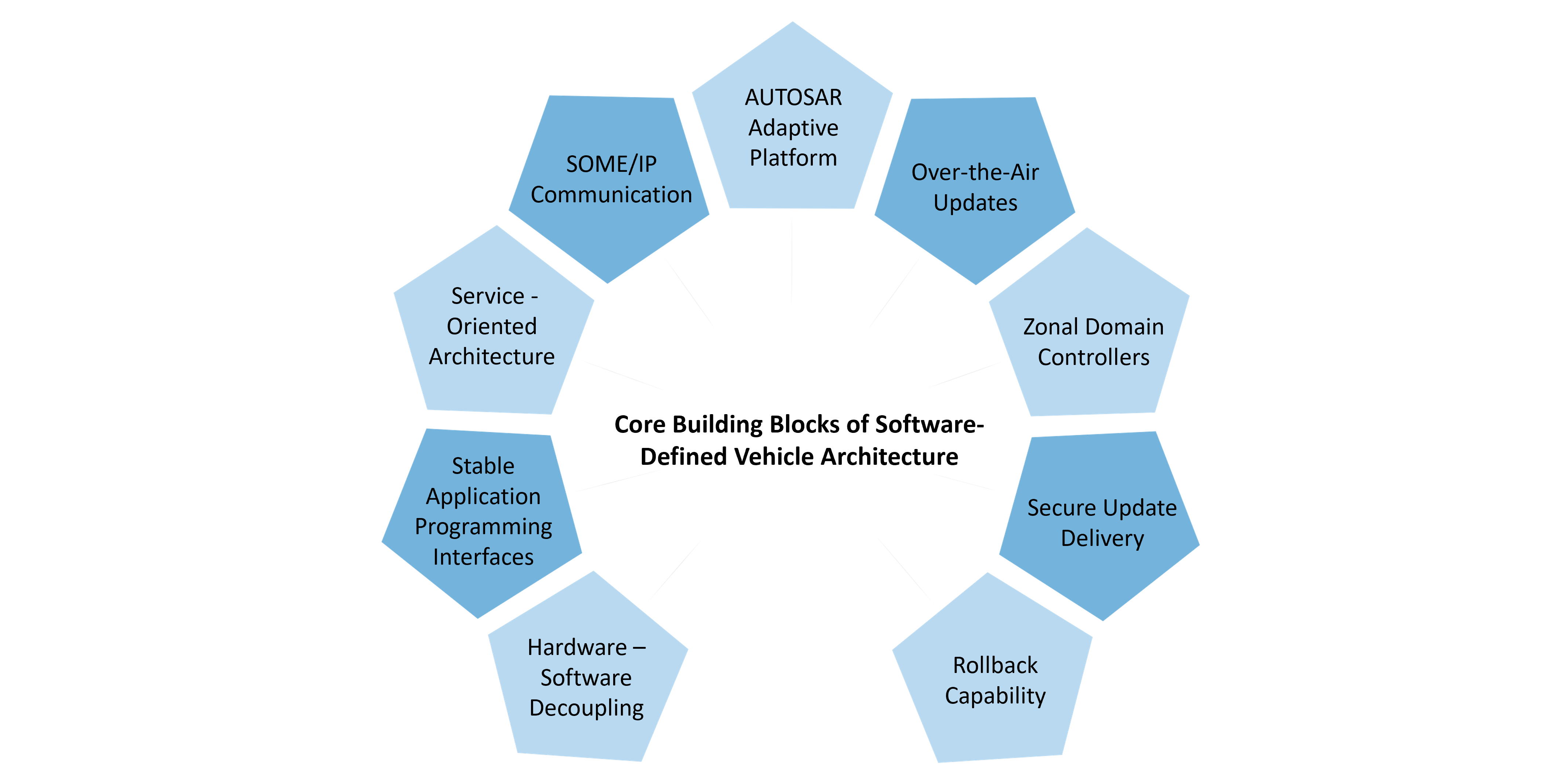
"Software-defined vehicle" gets used as a marketing phrase almost as often as it gets used precisely, so it is worth being specific about what the term means at the architecture level. Software-defined vehicle architecture: core technical building blocks is the set of engineering decisions, not the marketing narrative, that actually let a vehicle behave the way the phrase implies: features that ship, change, and improve mainly through software rather than through a hardware revision. Our AUTOSAR Classic vs. Adaptive article already uses "software-defined vehicle" as one of its framing keywords; this article is the dedicated technical treatment that term has been missing.
What actually makes a vehicle software-defined at the architecture level? is a fair question, because nearly every modern vehicle already runs a large amount of software. The distinguishing architecture trait isn't the presence of software, it's whether that software's behavior, and the vehicle's feature set, can be meaningfully changed after the vehicle has left the factory without a hardware change, through an update pushed to compute that was deliberately over-provisioned and designed for exactly that kind of change. A vehicle where every ECU's software is fixed at production and only ever patched for bugs is not software-defined in this sense, regardless of how much code it runs; a vehicle designed so new features and behavior changes ship as software updates against stable, abstracted hardware interfaces is.
Decoupling hardware and software release cycles in software-defined vehicles is the foundational architecture goal underneath everything else in this article. Traditional automotive development ties software tightly to a specific ECU hardware revision and its supplier's release schedule, which means a software improvement often has to wait for the next hardware program to ship. Decoupling hardware and software release cycles in software-defined vehicles requires abstraction layers, stable APIs between application software and the underlying hardware and operating system, so that software can be updated, tested, and released on its own cadence, sometimes measured in weeks, while the hardware underneath stays stable for years.
Service-oriented architecture (SOA) as the software-defined vehicle backbone is what actually implements that decoupling in software. Instead of tightly-coupled, signal-based communication where every ECU has to know the specific data layout every other ECU produces, SOA exposes vehicle functions as discoverable services with defined interfaces, similar in spirit to how backend microservices communicate, using protocols like SOME/IP over the vehicle's Ethernet backbone. Service-oriented architecture (SOA) as the software-defined vehicle backbone lets a new application consume an existing service, say, vehicle speed or door status, without needing to be hard-wired to the specific ECU currently producing it, which is exactly the flexibility a zonal or domain-consolidated hardware layout, covered in our companion article on zonal E/E architecture and domain controllers, is built to support.
AUTOSAR Adaptive for software-defined vehicle development is the standardized software platform most SDV programs build the SOA layer on top of, rather than inventing a proprietary middleware from scratch. Where AUTOSAR Classic targets resource-constrained, statically-configured ECUs, AUTOSAR Adaptive is designed for the more powerful, POSIX-based compute running in domain and zonal controllers, and it provides the service discovery, communication management, and dynamic software update support that SDV-style development actually needs. Our dedicated AUTOSAR Classic vs. Adaptive comparison covers the platform differences in depth; AUTOSAR Adaptive for software-defined vehicle development is where that platform choice becomes an architecture decision with direct consequences for how fast a program can actually ship software updates.
None of the decoupling this architecture enables matters commercially unless there is a reliable way to actually deliver a software update to a vehicle already in the field, which is why OTA update architecture is a first-class requirement in any real software-defined vehicle program rather than an afterthought bolted onto an existing design. That means update campaign management, staged rollouts, rollback capability if an update fails validation, and secure, authenticated delivery, all of which our sibling article on automotive OTA/SOTA update architecture covers directly as the delivery mechanism this article's architecture is designed to support.
Software-defined vehicle architecture: core technical building blocks doesn't stand on its own; it depends on a hardware layout that gives software something stable and abstracted to run on. Zonal domain controllers consolidate compute into fewer, more powerful targets, which is precisely what makes decoupled software release cycles, SOA-based communication, and OTA-manageable software practical at fleet scale rather than a theoretical goal. Readers building an SDV program should treat the zonal hardware architecture and this software architecture as one combined decision, not two separate ones made in sequence.
The engineering building blocks covered here exist to serve a business model, monetizable feature updates, subscription services, and continuous improvement after sale, that our blog post Automotive Tier 1 Supplier Relationships in the SDV Supply Chain covers from the commercial and supply-chain side. That business framing is a useful reality check on the architecture choices covered here: SOA, AUTOSAR Adaptive, and OTA infrastructure are worth their engineering cost specifically because they enable the business model, not as architecture for its own sake.
Embien Technologies designs software-defined vehicle architecture: core technical building blocks for OEM and Tier 1 programs, including SOA-based communication design, AUTOSAR Adaptive platform integration, and OTA/SOTA update architecture, alongside the zonal hardware consolidation this software layer depends on. General background on the SDV concept is available on our software-defined vehicles page. To discuss an SDV architecture for an upcoming vehicle program, reach out to Embien's engineering team.

Embien's Digital Transformation Services support automotive innovation through embedded software development, system integration, connected technologies, and software-driven vehicle solutions.

Embien supports Software-Defined Vehicle development through software architecture, service-oriented communication, AUTOSAR integration, and over-the-air update technologies.
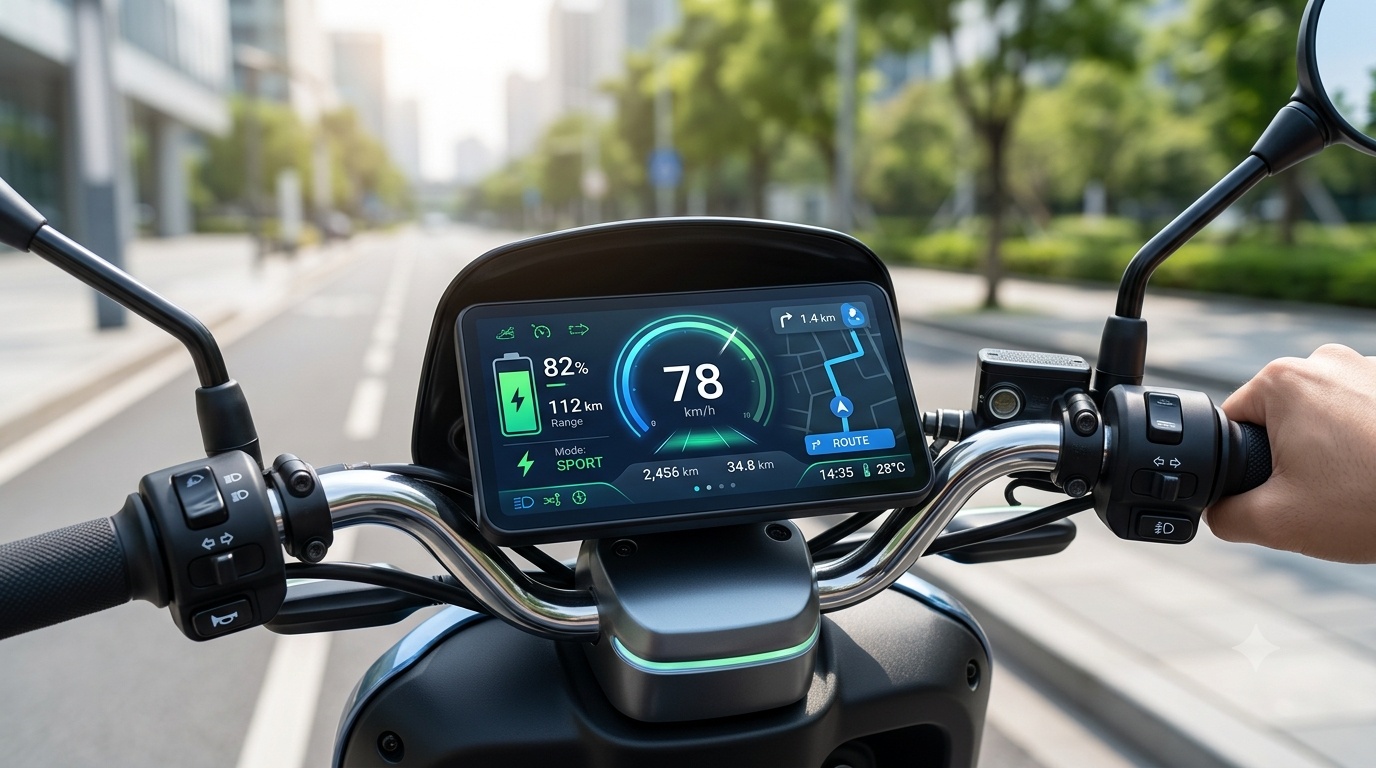
A case study on developing an Android-based HMI instrument cluster application for an electric two-wheeler, supporting an integrated rider interface and vehicle information display.